
The eBooks we sell are sold as a single-user licence and are intended for the end user only.
The sale of some eBooks are restricted to certain countries. To alert you to such restrictions, please select the country of the billing address of your credit or debit card you wish to use for payment.
For further information see https://www.wildy.com/ebook-formats
Once the order is confirmed an e-mail will be sent to you to allow you to download the eBook. For UK purchases this will be automatic. For purchases outside the UK a member of staff will need to confirm the sale. (Staff are available to do this during normal business hours, Mon-Fri 8:30-17:00 UK time)
All eBooks are supplied firm sale and cannot be returned. If you believe there is a fault with your eBook then contact us on ebooks@wildy.com and we will help in resolving the issue. This does not affect your statutory rights.
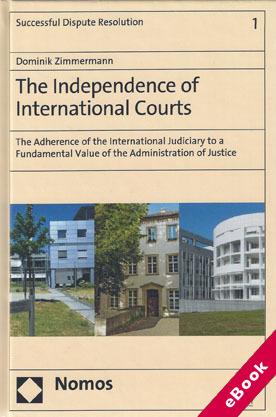
The study analyses the contents and scope of the principle of judicial independence as currently applied in the international judiciary. In light of the increasing role played by courts in the international system, the author initially examines the theoretical foundation for the principle's application and develops a working definition of judicial independence in an international law context.
On the basis of a comprehensive evaluation of sources pertaining to some of today's most influential international courts, the author then draws conclusions on a general consensus of normative requirements for judicial independence and is able to point to requirements applicable only to specific jurisdictions (e.g. human rights courts).
The study thus not only fills a gap in the scholarly evaluation of the organizational setup of the current international judiciary but also functions as a valuable guide for potential future permanent judicial bodies.










