The eBooks we sell are sold as a single-user licence and are intended for the end user only.
The sale of some eBooks are restricted to certain countries. To alert you to such restrictions, please select the country of the billing address of your credit or debit card you wish to use for payment.
For further information see https://www.wildy.com/ebook-formats
Once the order is confirmed an e-mail will be sent to you to allow you to download the eBook. For UK purchases this will be automatic. For purchases outside the UK a member of staff will need to confirm the sale. (Staff are available to do this during normal business hours, Mon-Fri 8:30-17:00 UK time)
All eBooks are supplied firm sale and cannot be returned. If you believe there is a fault with your eBook then contact us on ebooks@wildy.com and we will help in resolving the issue. This does not affect your statutory rights.
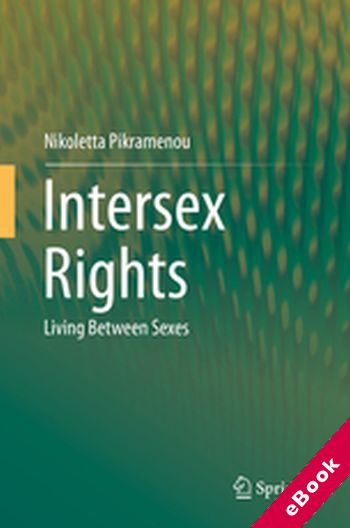
This book addresses intersex rights violations and analyses intersex people’s legal demands as expressed by intersex activists themselves and delivered through statements and reports issued by intersex rights organisations, the United Nations and the Council of Europe.
Intersex people are born with sex characteristics that do not fit typical notions of male or female bodies, as a result of which they are stigmatised, marginalised and denied the recognition of their fundamental rights. Often, they are subjected to involuntary and harmful sex “normalising” surgeries at birth, which violate their bodily integrity, self-determination and informed consent, so as to comply with societal and legal norms.
Moreover, binary legal frameworks prevent them from enjoying the rights to access identification documents, start a family, or be free from discrimination in all areas including employment and sports. To elaborate on intersex violations that emanate from binary laws, this book examines the situation of intersex rights in regional jurisdictions worldwide and within the European Union in particular. In the process, it identifies current legal barriers and suggests how intersex people could be accommodated under legal frameworks and achieve sex/gender equality beyond binary definitions.