
The eBooks we sell are sold as a single-user licence and are intended for the end user only.
The sale of some eBooks are restricted to certain countries. To alert you to such restrictions, please select the country of the billing address of your credit or debit card you wish to use for payment.
For further information see https://www.wildy.com/ebook-formats
Once the order is confirmed an e-mail will be sent to you to allow you to download the eBook. For UK purchases this will be automatic. For purchases outside the UK a member of staff will need to confirm the sale. (Staff are available to do this during normal business hours, Mon-Fri 8:30-17:00 UK time)
All eBooks are supplied firm sale and cannot be returned. If you believe there is a fault with your eBook then contact us on ebooks@wildy.com and we will help in resolving the issue. This does not affect your statutory rights.
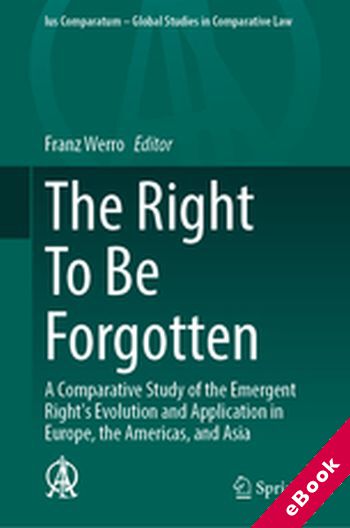
This book examines the right to be forgotten and finds that this right enjoys recognition mostly in jurisdictions where privacy interests impose limits on freedom of expression. According to its traditional understanding, this right gives individuals the possibility to preclude the media from revealing personal facts that are no longer newsworthy, at least where no other interest prevails. Cases sanctioning this understanding still abound in a number of countries. In today's world, however, the right to be forgotten has evolved, and it appears in a more multi-faceted way. It can involve for instance also the right to access, control and even erase personal data. Of course, these prerogatives depend on various factors and competing interests, of both private and public nature, which again require careful balancing. Due to ongoing technological evolution, it is likely that the right to be forgotten in some of its new manifestations will become increasingly relevant in our societies.










