
The eBooks we sell are sold as a single-user licence and are intended for the end user only.
The sale of some eBooks are restricted to certain countries. To alert you to such restrictions, please select the country of the billing address of your credit or debit card you wish to use for payment.
For further information see https://www.wildy.com/ebook-formats
Once the order is confirmed an e-mail will be sent to you to allow you to download the eBook. For UK purchases this will be automatic. For purchases outside the UK a member of staff will need to confirm the sale. (Staff are available to do this during normal business hours, Mon-Fri 8:30-17:00 UK time)
All eBooks are supplied firm sale and cannot be returned. If you believe there is a fault with your eBook then contact us on ebooks@wildy.com and we will help in resolving the issue. This does not affect your statutory rights.
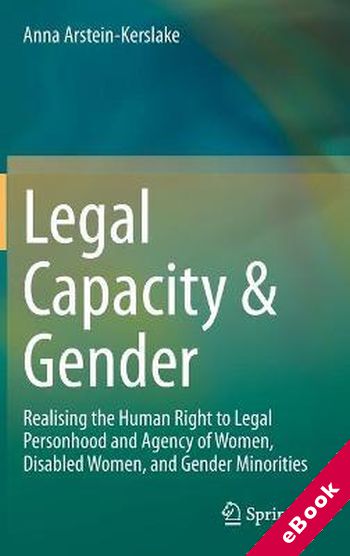
This book explores the role of gender in the recognition of an individual's legal capacity. It discusses the meaning of the right to legal capacity and its two core elements - legal personhood and legal agency. It then analyses historical and modern denials of personhood and agency experienced by women, disabled women, and gender minorities - for example, prohibitions from voting, limitations on contracting, loss of personhood upon marriage, and gender binary requirements leading to an inability to exercise legal capacity, among others. Using critical feminist, disability, and queer theory, this book also offers insights into the construction of legal personhood and its role as a predictor of power and privilege. The book identifies patterns of oppression through legal capacity denial in various jurisdictions and discusses situations in which modern law continues to enforce these denials. In addition, the book presents solutions: it identifies practices to learn from in various jurisdictions around the world - including both civil law and common law jurisdictions. It also uses case studies to illustrate the ways in which existing laws, policies and practices could be reformed. As such, the book offers both a novel contribution to the field of legal capacity law and a tool for creating change and helping to realise the right to legal capacity for all.










