
The eBooks we sell are sold as a single-user licence and are intended for the end user only.
The sale of some eBooks are restricted to certain countries. To alert you to such restrictions, please select the country of the billing address of your credit or debit card you wish to use for payment.
For further information see https://www.wildy.com/ebook-formats
Once the order is confirmed an e-mail will be sent to you to allow you to download the eBook. For UK purchases this will be automatic. For purchases outside the UK a member of staff will need to confirm the sale. (Staff are available to do this during normal business hours, Mon-Fri 8:30-17:00 UK time)
All eBooks are supplied firm sale and cannot be returned. If you believe there is a fault with your eBook then contact us on ebooks@wildy.com and we will help in resolving the issue. This does not affect your statutory rights.
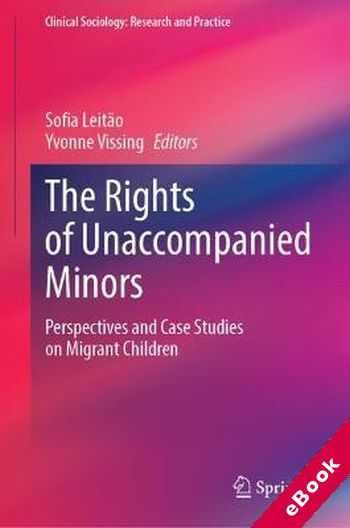
This volume explores the various challenges faced by migrant unaccompanied children, using a clinical sociological approach and a global perspective. It applies a human rights and comparative framework to examine the reception of unaccompanied children in European, North American, South American, Asian and African countries. Some of the important issues the volume discusses are: access of displaced unaccompanied children to justice across borders and juridical contexts; voluntary guardianship for unaccompanied children; the diverse but complementary needs of unaccompanied children in care, which if left unaddressed can have serious implications on their social integration in the host societies; and the detention of migrant children as analyzed against the most recent European and international human rights law standards.
This is a one-of-a-kind volume bringing together perspectives from child rights policy chairs across the world on a global issue. The contributions reflect the authors' diverse cultural contexts and academic and professional backgrounds, and hence, this volume synthesizes theory with practice through rich firsthand experiences, along with theoretical discussions. It is addressed not only to academics and professionals working on and with migrant children, but also to a wider, discerning public interested in a better understanding of the rights of unaccompanied children.











