
The eBooks we sell are sold as a single-user licence and are intended for the end user only.
The sale of some eBooks are restricted to certain countries. To alert you to such restrictions, please select the country of the billing address of your credit or debit card you wish to use for payment.
For further information see https://www.wildy.com/ebook-formats
Once the order is confirmed an e-mail will be sent to you to allow you to download the eBook. For UK purchases this will be automatic. For purchases outside the UK a member of staff will need to confirm the sale. (Staff are available to do this during normal business hours, Mon-Fri 8:30-17:00 UK time)
All eBooks are supplied firm sale and cannot be returned. If you believe there is a fault with your eBook then contact us on ebooks@wildy.com and we will help in resolving the issue. This does not affect your statutory rights.
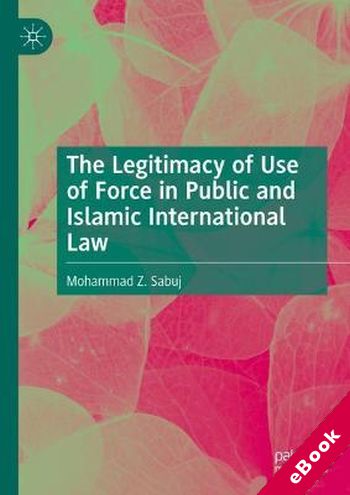
This book investigates the legitimacy deficits of two potentially conflicting legal systems, namely Public and Islamic international law. It discusses the challenges that Public international law is being presented within the context of its relationship with Islamic international law. It explores how best to overcome these challenges through a comparative examination of state practices on the use of force. It highlights the legal-political legacies that evolved surrounding the claims of the legitimacy of use of force by armed non-state actors, states, and regional organizations.
This book offers a critical analysis of these legacies in line with the Islamic Shari'a law, United Nations Charter, state practices, and customs. It concludes that the legitimacy question has reached a vantage point where it cannot be answered either by Islamic or Public international law as a mutually exclusive legal system. Instead, Public international law must take a coherent approach within the existing legal framework.











