The eBooks we sell are sold as a single-user licence and are intended for the end user only.
The sale of some eBooks are restricted to certain countries. To alert you to such restrictions, please select the country of the billing address of your credit or debit card you wish to use for payment.
For further information see https://www.wildy.com/ebook-formats
Once the order is confirmed an e-mail will be sent to you to allow you to download the eBook. For UK purchases this will be automatic. For purchases outside the UK a member of staff will need to confirm the sale. (Staff are available to do this during normal business hours, Mon-Fri 8:30-17:00 UK time)
All eBooks are supplied firm sale and cannot be returned. If you believe there is a fault with your eBook then contact us on ebooks@wildy.com and we will help in resolving the issue. This does not affect your statutory rights.
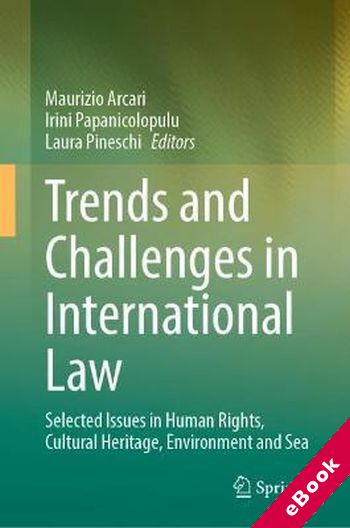
Over the last century, international law has sought to keep pace with sweeping changes that have revolutionised the international community. It has done so in various ways: by developing new fields, adopting new legal instruments, and including new actors and entities in the international fora. Human rights law and environmental law have emerged to address essential issues raised by civil society. Treaties, judgments and soft law instruments have attempted to fill the gaps in regulation. International organisations, corporations, civil society organisations and individuals have all worked to make and enforce, also by judicial means, legal rules. But is all this sufficient?
In an effort to answer this question, the chapters of this volume explore selected emerging issues in the fields of human rights, the environment, cultural heritage and law of the sea. Can state responsibility help to protect the environment? Can protecting human rights be reconciled with national security? Can the UN Security Council address climate change? Is law of the sea still fit for purpose? And how can we balance human rights and the environment, or cultural heritage and law of the sea? The international scholars and experienced practitioners who have contributed to this volume discuss these and other key questions.
Given its scope, the book will appeal to researchers and scholars of international law, as well as those specialising in human rights law, environmental law, cultural heritage law, and law of the sea.