
The eBooks we sell are sold as a single-user licence and are intended for the end user only.
The sale of some eBooks are restricted to certain countries. To alert you to such restrictions, please select the country of the billing address of your credit or debit card you wish to use for payment.
For further information see https://www.wildy.com/ebook-formats
Once the order is confirmed an e-mail will be sent to you to allow you to download the eBook. For UK purchases this will be automatic. For purchases outside the UK a member of staff will need to confirm the sale. (Staff are available to do this during normal business hours, Mon-Fri 8:30-17:00 UK time)
All eBooks are supplied firm sale and cannot be returned. If you believe there is a fault with your eBook then contact us on ebooks@wildy.com and we will help in resolving the issue. This does not affect your statutory rights.
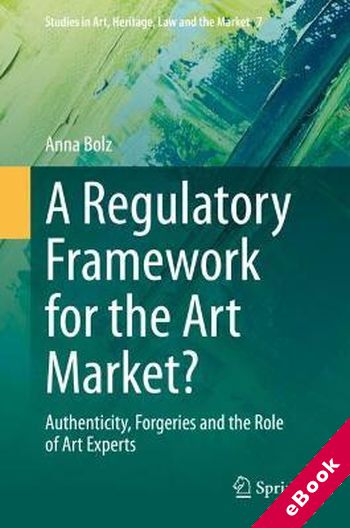
This book addresses practical issues in connoisseurship and authentication, as well as the legal implications that arise when an artwork's authenticity is challenged. In addition, the standards and processes of authentication are critically examined and the legal complications which can inhibit the expression of expert opinions are discussed.
The notion of authenticity has always commanded the attention of art market participants and the general art-minded public alike. Coinciding with this, forgery is often considered to be the world's most glamorous crime, packed with detective stories that are usually astonishing and often bizarre. The research includes findings by economists, sociologists, art historians, lawyers, academics and practitioners, all of which yield insights into the mechanics and peculiarities of the art business and explain why it works so differently from other markets.
However, this book will be of interest not only to academics, but to everyone interested in questions of authenticity, forgery and connoisseurship. At the same time, one of its main aims is to advocate best practices in the art market and to stress the importance of cooperation among all disciplines with a stake in it. The results are intended to offer guidance to art market stakeholders, legal practitioners and art historians alike, while also promoting mutual understanding and cooperation.










