The eBooks we sell are sold as a single-user licence and are intended for the end user only.
The sale of some eBooks are restricted to certain countries. To alert you to such restrictions, please select the country of the billing address of your credit or debit card you wish to use for payment.
For further information see https://www.wildy.com/ebook-formats
Once the order is confirmed an e-mail will be sent to you to allow you to download the eBook. For UK purchases this will be automatic. For purchases outside the UK a member of staff will need to confirm the sale. (Staff are available to do this during normal business hours, Mon-Fri 8:30-17:00 UK time)
All eBooks are supplied firm sale and cannot be returned. If you believe there is a fault with your eBook then contact us on ebooks@wildy.com and we will help in resolving the issue. This does not affect your statutory rights.
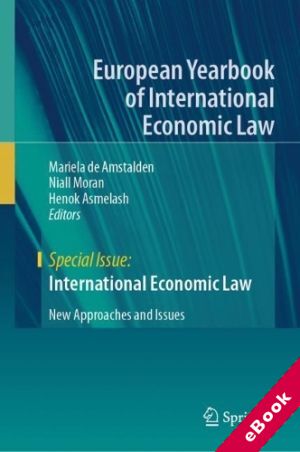
European Yearbook of International Economic Law Special Issue
This volume considers novel emerging issues in international economic law, as well as new methodological approaches to more familiar topics. It brings together a diverse range of contributors from five continents, who share invaluable perspectives on a wide range of issues in international economic governance. In doing so, this volume delves deeply into some of the most challenging emerging areas in international economic law, approaching them from an interdisciplinary perspective that brings together legal, economic, and political analysis.
Intended for academics and practitioners at all stages of their careers, many of the areas considered in this volume are either entirely new or are being revisited after periods of dormancy. It is our hope that these contributions will yield fresh insights into these new and “classic” areas of IEL. We consider diversity and inclusivity foundational values in IEL. The wealth of ideas showcased in this volume present us with an opportunity to appreciate different facets of originality and rigour in legal academic writing, further highlighting the range of methodological and stylistic preferences of emerging legal scholars in IEL. In June 2022, forty emerging international economic law scholars were selected to present their papers at PEPA/SIEL, where they received feedback from senior members of the SIEL community and beyond. The discussions were lively, stimulating and enriching, leading the editors of this volume to propose putting a selection of the papers into a published book.