
The eBooks we sell are sold as a single-user licence and are intended for the end user only.
The sale of some eBooks are restricted to certain countries. To alert you to such restrictions, please select the country of the billing address of your credit or debit card you wish to use for payment.
For further information see https://www.wildy.com/ebook-formats
Once the order is confirmed an e-mail will be sent to you to allow you to download the eBook. For UK purchases this will be automatic. For purchases outside the UK a member of staff will need to confirm the sale. (Staff are available to do this during normal business hours, Mon-Fri 8:30-17:00 UK time)
All eBooks are supplied firm sale and cannot be returned. If you believe there is a fault with your eBook then contact us on ebooks@wildy.com and we will help in resolving the issue. This does not affect your statutory rights.
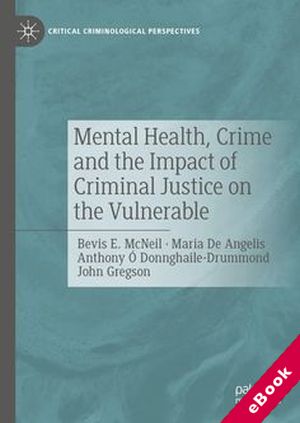
This book addresses a variety of key issues surrounding mental health and the criminalization of certain individuals and groups by the Criminal Justice System and the impact this can have on their mental health. It challenges the assumption that people with mental health problems are in some way a risk or danger to society (and themselves) and therefore have a greater propensity for committing crimes, when in reality they are more likely to become the victims of crime. It argues that the misguided correlations drawn between mental health and crime, as perpetuated by the media, policy makers, clinicians, agents of the criminal justice system, and ultimately the public, lead to the criminalization of the vulnerable. Furthermore, the criminalization, stigmatization, stereotyping, labelling and discrimination endured by people with mental health problems has a devastating effect on their mental health and well-being and has negative consequences for society as a whole.
Each chapter focuses on a specific area relating to mental health, identifying key themes and issues, as well as offering recommendations for improvements with regards to the treatment and support for people with mental health problems. In addition, the treatment of offenders with mental health problems who engage with the criminal justice system and its services, such as the police, prison and probation services, is critically evaluated.










