
The eBooks we sell are sold as a single-user licence and are intended for the end user only.
The sale of some eBooks are restricted to certain countries. To alert you to such restrictions, please select the country of the billing address of your credit or debit card you wish to use for payment.
For further information see https://www.wildy.com/ebook-formats
Once the order is confirmed an e-mail will be sent to you to allow you to download the eBook. For UK purchases this will be automatic. For purchases outside the UK a member of staff will need to confirm the sale. (Staff are available to do this during normal business hours, Mon-Fri 8:30-17:00 UK time)
All eBooks are supplied firm sale and cannot be returned. If you believe there is a fault with your eBook then contact us on ebooks@wildy.com and we will help in resolving the issue. This does not affect your statutory rights.
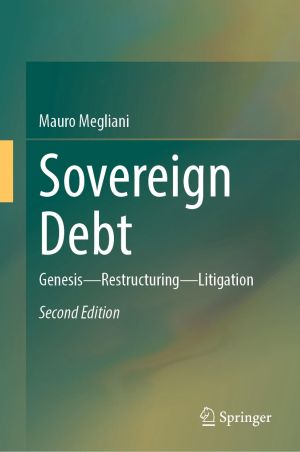
The second edition of the book provides a thorough legal analysis of sovereign indebtedness, examining four typologies of sovereign debt – bilateral debt, multilateral debt, syndicated debt, and bonded debt – in connection with three crucial aspects: genesis, restructuring, and litigation. Its treatise-style approach makes it possible to capture in a systematic manner a phenomenon characterized by high complexity and huge multidisciplinarity. Because of this complexity and multidisciplinarity, the legal analysis is not exclusively based on international law, but also includes private international law, domestic law and financial practice. To better contextualise the phenomenon, references are made to international financial relations and international financial history. Although it follows the structure of a continental tractatus, the work presents a good balance between doctrinal and jurisprudential sources, making it a valuable reference book for scholars and practitioners alike.
The main updates in the second edition include: the effects of the Covid and Ukrainian crises and the Puerto Rico default; the issue of the validity of the Mozambican, Ukrainian, and Venezuelan loans; an analysis of China’s lending policy with particular reference to Africa; a description of the Asian Infrastructure Investment Bank and the New Development Bank; the role of credit rating agencies in the bond issuing process and the ICMA Principles on green, social, and sustainable bonds; the place of marine conservation swaps and climate swaps in restructuring processes; an inquiry into the legal status of the Paris Club and an illustration of the ad hoc terms for restructuring and the Debt Service Suspension Initiative; the inclusion of single-limb collective action clauses in the terms of the bonded loans; the conclusion of the lawsuits brought by vulture funds before the US courts and of the ICSID arbitrations instituted against Argentina; and, finally, an account on the Paris Club Common Framework and the UN Basic Principles on Sovereign Debt Restructuring.











