
Wildy Logo
(020) 7242 5778
enquiries@wildy.com

Book of the Month

Cover of Service in Civil Proceedings: Law and Practice

Service in Civil Proceedings: Law and Practice

Price: £150.00

Planning Law:
A Practitioner's Handbook
2nd ed


 William Webster, Robert Weatherley


Welcome to Wildys

Watch


Judicial Cooperation in Commercial Litigation 3rd ed (The British Cross-Border Financial Centre World)


 Ian Kawaley, David Doyle, Shade Subair Williams


Offers for Newly Called Barristers & Students

Special Discounts for Newly Called & Students

Read More ...


Secondhand & Out of Print

Browse Secondhand Online

Read More...


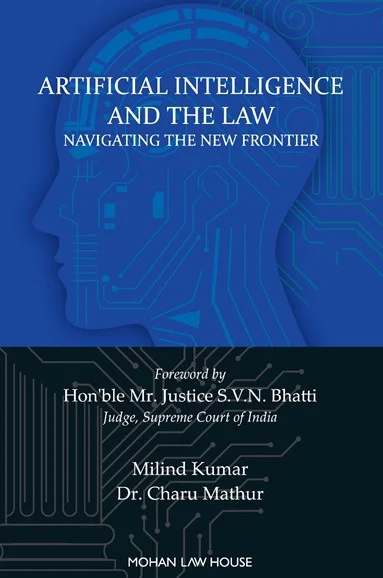
Artificial Intelligence and the Law : Navigating the New Frontier


ISBN13: 9788199209879
Published: April 2026
Publisher: Mohan Law House
Country of Publication: India
Format: Hardback
Price: £44.99


Despatched in 8 to 10 days.

This book approaches Artificial Intelligence not as a futuristic idea or an abstract technological problem, but as a governance challenge that legal systems are already required to manage. Artificial intelligence is treated here as a set of tools and systems that shape how power is exercised, decisions are made, and responsibilities are allocated within existing legal institutions.

The starting point of the book is that AI does not operate in a legal vacuum. Whether AI is used by governments, courts, corporations, platforms, or professionals, it functions within established structures of law. Constitutional guarantees, tort principles, contract doctrine, labour protections, criminal procedure, and arbitration rules continue to apply. The central question is therefore not whether the law is relevant to AI, but how existing legal principles must be applied, adapted, and enforced when decisions are influenced or assisted by automated systems.

The approach of the book is practical and institution-focused. Rather than speculating about future technologies, the chapters examine how AI is already being used in real settings. Legal analysis is grounded in statutes, case law, regulatory frameworks, and emerging judicial practice.

Comparative Law is used throughout the book as a practical tool. Jurisdictions such as India, the European Union, the United States, the United Kingdom, are discussed to understand how different legal systems respond to similar challenges. These comparisons are used to understand different legal approaches and to identify legal techniques, safeguards, and limits that have been adopted in response to AI-driven decision-making.

A consistent theme of the book is that efficiency cannot displace legality. The use of AI may improve speed, scale, or consistency, but it does not dilute requirements of fairness, due process, proportionality, reasoned decision-making, or judicial review. When AI is introduced institutions must ensure that legal and constitutional standards are fully respected.

The book also adopts a conscious Global South perspective, particularly in its treatment of state capacity, digital public infrastructure, welfare delivery, and development policy. This perspective recognises that AI governance challenges differ across jurisdictions, especially where public systems operate at population scale and where institutional resources vary.


Subjects:
IT, Internet and Artificial Intelligence Law
Contents:
1. Introduction
2. Technical Foundations of AI
3. Importance and Applications of AI
4. Ethical Considerations for Liability of Artificial Intelligence Decision-Making
5. Legal Personhood for Artificial Intelligence
6. AI Systems and Liability
7. AI and the Evolution of Human Rights Jurisprudence
8. The Indian Human Rights Perspective
9. Governance Principles for Ethical AI
10. Artificial Intelligence and Intellectual Property Rights: Challenges and Emerging Norms
11. Algorithmic Markets and the Future of Competition Law: Collusion, Platform Power, and Ex-Ante Regulation in the Age of Artificial Intelligence
12. Application of AI in Criminal Justice System
13. Artificial Intelligence in Healthcare
14. Artificial Intelligence in Corporate Sectors
15. Artificial Intelligence, Social Media and Disinformation
16. Tort Law & Artificial Intelligence
17. Contract Law and Artificial Intelligence: Formation, Performance, and Remedies in the Age of Autonomous Systems
18. Smart Contracts: How They Work and What the Law Says Today
19. Artificial Intelligence and Work: How AI is Changing Jobs, Rights, and Labour Law Today
20. Artificial Intelligence and Privacy: How Personal Data is Collected, Used, and Protected in the Age of AI
21. Artificial Intelligence in Regulated Sectors and Public Law: Administrative Power, Fairness, and Accountability
22. Artificial Intelligence and Arbitration: Procedure, Fairness, and Enforceability
23. AI-Enabled Cybercrime and Digital Evidence: Attribution, Authenticity, and Admissibility
24. Charting the Path Ahead: A Policy Agenda for Equitable AI in the Global South
25. India’s AI Strategy: Digital Public Infrastructure and Global Governance
26. AI Governance Frameworks in Key Global Jurisdictions: China, Japan, Singapore, Malaysia, Canada, Australia, South Korea, Brazil, UAE, and Saudi Arabia
27. AI and the Legal Profession;







