
The eBooks we sell are sold as a single-user licence and are intended for the end user only.
The sale of some eBooks are restricted to certain countries. To alert you to such restrictions, please select the country of the billing address of your credit or debit card you wish to use for payment.
For further information see https://www.wildy.com/ebook-formats
Once the order is confirmed an e-mail will be sent to you to allow you to download the eBook. For UK purchases this will be automatic. For purchases outside the UK a member of staff will need to confirm the sale. (Staff are available to do this during normal business hours, Mon-Fri 8:30-17:00 UK time)
All eBooks are supplied firm sale and cannot be returned. If you believe there is a fault with your eBook then contact us on ebooks@wildy.com and we will help in resolving the issue. This does not affect your statutory rights.
Due to a technical issue some ebooks are not available to order.
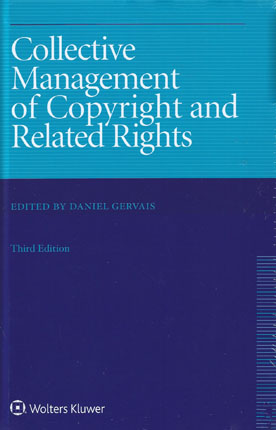
In the course of the last two decades, collective management organizations (CMOs) have become the nerve centres of copyright licensing in virtually every country. Their expertise and knowledge of copyright law and management have proven essential to make copyright work in the digital age.
All the chapters have been updated since the 2010 edition. New chapters on Africa, China, Central Europe and New Zealand (together with Australia, which is no longer discussed in the separate chapter on Canada) have been added
Factors considered include the following:-
Part I presents a number of horizontal issues that affect collective management in almost every country. Part II is divided on a geographical basis, focusing on systems representative of the principal models applied in various countries and regions. Each country specific or region-specific chapter provides a historical overview and a presentation of existing CMOs and their activities, gives financial information where available, describes how CMOs are supervised or controlled by legislation, and offers thoughts about the challenges facing CMOs in the country or region concerned. Many of these national and regional commentaries are the only such information sources available in English.
Whatever the future of copyright holds, it is clear that users will continue to want access and the ability to reuse material lawfully, and authors and other rights holders will want to ensure that they can put some reasonable limits on those uses, including an ability to monetize commercially relevant uses. CMOs are sure to be critical intermediaries in this process.
The second edition of this important resource, with its key insights into the changing nature of collective management, will be of immeasurable value to all concerned with shaping policy towards collective management or working with the ever more complex legal issues arising in digital age copyright matters.










