
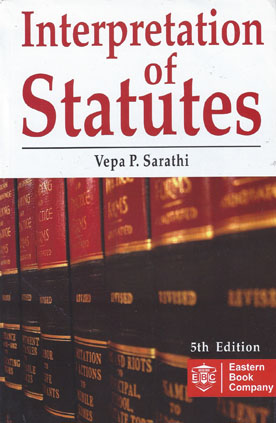
in this very popular and authoritative book Prof. Vepa P. Sarathi provides a clear understanding of the rules of interpretation of statutes.
While discussing all the prevalent rules of interpretation, the author strongly advocates the rule 'to consider all the material relevant to the enactment, especially, travau.x preparatoires (preparatory works), and find out precisely what is its object. The author goes on to explain the scope and limitations of the other rules of interpretation.
The discussion of the topics is supported by a wealth of authoritative writings of jurists and apt quotations of eminent writers. The students will find the work highly readable, and the practitioners will value it as a dependable reference work, especially with respect to retrospective nature, delegated legislation and pith and substance.
The author has given a thoroughly analytical account of the relevant cases, both Indian and foreign. He has expressed views on Parliament's power to amend the Constitution under Article 368 of the Constitution. The General Clauses Act, 1897 and a section on legal maxims are given as Appendix I and II, respectively.










