The eBooks we sell are sold as a single-user licence and are intended for the end user only.
The sale of some eBooks are restricted to certain countries. To alert you to such restrictions, please select the country of the billing address of your credit or debit card you wish to use for payment.
For further information see https://www.wildy.com/ebook-formats
Once the order is confirmed an e-mail will be sent to you to allow you to download the eBook. For UK purchases this will be automatic. For purchases outside the UK a member of staff will need to confirm the sale. (Staff are available to do this during normal business hours, Mon-Fri 8:30-17:00 UK time)
All eBooks are supplied firm sale and cannot be returned. If you believe there is a fault with your eBook then contact us on ebooks@wildy.com and we will help in resolving the issue. This does not affect your statutory rights.
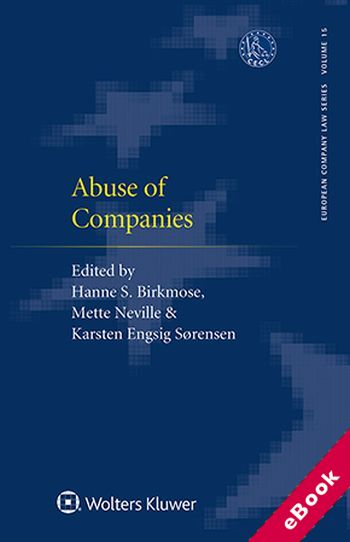
Abuse of Companies focuses on whether the corporate form is used as such to avoid liabilities or cover illegal acts, or whether abuse is practised to obtain certain advantages. The subject of this first-ever, in-depth survey and analysis garners more attention every day – both in legal literature and in popular media. Taken together, the authoritative contributions in this book clearly and comprehensively reveal typical situations where abuse may take place and how company law and other areas of law have tackled these incidents and practices in a variety of key jurisdictions. It gives an understanding of the background, implications and limitations of the different measures adopted to avoid abuse of companies.
What’s in this book:
Focusing on Europe but with global implications, the topics raised include the following:
This book helps to explain how the line is drawn between abuse and (creative) use of the corporate form. Remedies covered include restricting the use of bearer shares, setting minimum capital requirements, piercing the corporate veil, ensuring transparency of beneficial ownership, using insolvency law to lodge claims against directors and shareholders and recover assets, and applying the general principle prohibiting abuse.
How this will help you:
There is no other book on the market focusing on abuse of companies and giving such a comprehensive analysis of the topic. Practitioners will get guidelines on how to avoid becoming involved in activities that may constitute abuse and how to address instances where abuse has occurred. Interested academics, legislators, and enforcement authorities in Europe and beyond will find this book’s perspectives invaluable.