
The eBooks we sell are sold as a single-user licence and are intended for the end user only.
The sale of some eBooks are restricted to certain countries. To alert you to such restrictions, please select the country of the billing address of your credit or debit card you wish to use for payment.
For further information see https://www.wildy.com/ebook-formats
Once the order is confirmed an e-mail will be sent to you to allow you to download the eBook. For UK purchases this will be automatic. For purchases outside the UK a member of staff will need to confirm the sale. (Staff are available to do this during normal business hours, Mon-Fri 8:30-17:00 UK time)
All eBooks are supplied firm sale and cannot be returned. If you believe there is a fault with your eBook then contact us on ebooks@wildy.com and we will help in resolving the issue. This does not affect your statutory rights.
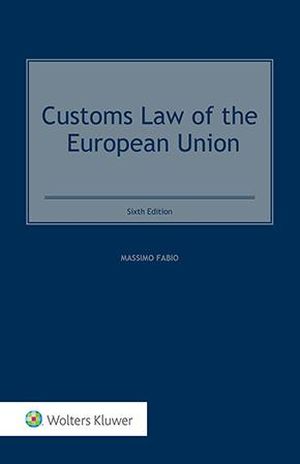
Customs Law of the European Union, currently in its sixth edition, is a highly practical work dealing with the ins and outs of European Union (EU) customs law. Cases of study, jurisprudence and comparative law support the analysis of the different legal tools. The consolidated principles ruling the transactions within WTO Member States applied in EU law offer the readers the opportunity to understand how customs rules can be applied in any customs jurisdiction. Today, global competition obliges companies dealing in international trade to modernize their procedures of delivery to minimize the customs burden and simplify the relation with customs authorities, becoming autonomous in formalities and fully complying with the incessant rapid development of the international trade landscape. Customs planning is the current option to be effective in the worldwide marketplace. Furthermore, a new challenge is now represented by Trade Wars between major countries with the application of ‘universal tariffs’, generating a relevant impact for businesses and final consumers. In this framework, customs authorities must offset two different approaches: they must ensure the smooth flow of trade while applying necessary controls on the one hand while protecting the health and safety of the Community's citizens on the other. To achieve – and maintain – the correct balance between these demands, control methods are constantly evolving raising major challenges to those charged with planning and compliance. However, lawyers and professionals need to keep their trade and customs knowledge constantly updated in the perspective to address every evolution dictated by the digital agenda as well as the geopolitical disruption of the new global market.
What’s in this book:
The following topics have been analysed in this book:
How this will help you:
Authored by an international tax lawyer with extensive experience working with multinational companies and international institutions, Professor of Trade and Customs Law at the European University of Rome, this practical guide is designed to help the reader get an immediate and comprehensive understanding of trade and customs rules, staying in compliance with the laws controlling EU importing and exporting while structuring worldwide transactions in a business-friendly manner. The content has been designed to satisfy every reader, from the university student to the corporate lawyer, to share the intimate conviction of the author that – in any case – ‘borders divide customs connect’.










