
The eBooks we sell are sold as a single-user licence and are intended for the end user only.
The sale of some eBooks are restricted to certain countries. To alert you to such restrictions, please select the country of the billing address of your credit or debit card you wish to use for payment.
For further information see https://www.wildy.com/ebook-formats
Once the order is confirmed an e-mail will be sent to you to allow you to download the eBook. For UK purchases this will be automatic. For purchases outside the UK a member of staff will need to confirm the sale. (Staff are available to do this during normal business hours, Mon-Fri 8:30-17:00 UK time)
All eBooks are supplied firm sale and cannot be returned. If you believe there is a fault with your eBook then contact us on ebooks@wildy.com and we will help in resolving the issue. This does not affect your statutory rights.
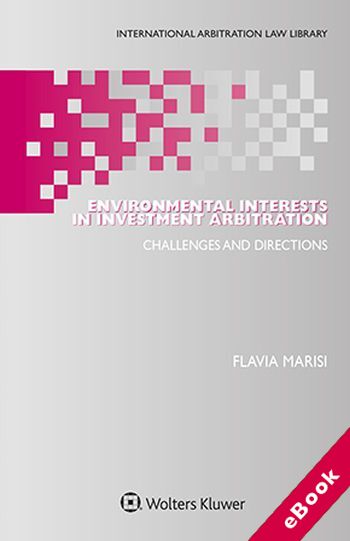
Environmental Interests in Investment Arbitration examines the legal framework for environmental interests in investment law, with the purpose of reaching a balance between the protection of foreign investments and the protection of the environment. Economic growth, social inclusion, and environmental protection stand at the core of sustainable development, which aims to deliver long-term growth for current and future generations. Foreign Direct Investment (FDI) can play a key role in sustainable development. Host States’ benefits descending from FDI inflows include tax revenues, technology transfer, specialised training of local human resources, network with satellite activities, better availability of quality products and customer-centric services, and these downstream effects stimulate economic growth and social inclusion. This thoroughly researched book explores the relationship between environmental protection – the third component of sustainable development – and FDI. In recent years, an increasing number of investment arbitration cases have seen a clash between the states’ commitments towards their citizens, which include the duty to protect the environment, their health and wellbeing, and the commitment towards foreign investors to protect their investments. The author focuses on investor-state cases in which environmental protection measures have been contested and discusses substantive mechanisms in treaty drafting, rules of Customary International Law, and interpretation doctrines, which are aimed at taking environmental concerns into consideration.
What’s in this book:
The topics covered include the following:
How this will help you:
With its in-depth analysis and careful documentation, this book aptly captures the inherent fragmentation of international law and undoubtedly represents an invaluable resource for both international law practitioners and scholars. Providing an articulate framework of the available legal instruments and identifying the ways to reconcile the potential clash of the protection of private and public interests, the solution-oriented approach adopted in this book will be welcomed by legal counsel, law firms, investment treaty negotiators, and decision makers at the different stages of investment lawmaking and practice, as well as by international institutions and academics.










