
The eBooks we sell are sold as a single-user licence and are intended for the end user only.
The sale of some eBooks are restricted to certain countries. To alert you to such restrictions, please select the country of the billing address of your credit or debit card you wish to use for payment.
For further information see https://www.wildy.com/ebook-formats
Once the order is confirmed an e-mail will be sent to you to allow you to download the eBook. For UK purchases this will be automatic. For purchases outside the UK a member of staff will need to confirm the sale. (Staff are available to do this during normal business hours, Mon-Fri 8:30-17:00 UK time)
All eBooks are supplied firm sale and cannot be returned. If you believe there is a fault with your eBook then contact us on ebooks@wildy.com and we will help in resolving the issue. This does not affect your statutory rights.
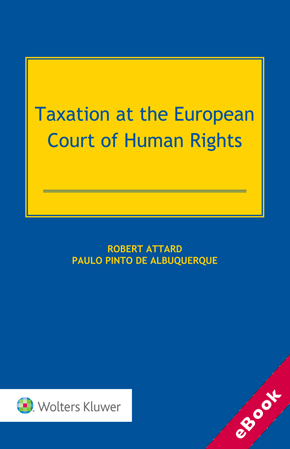
Taxation at the European Court of Human Rights is a first-of-its-kind to critically analyse over 500 of the European Court of Human Rights (ECtHR’s) important ‘tax cases’, which create a human rights code of conduct for European Convention on Human Rights (ECHR) State Signatories in matters involving taxation. Albeit the ECHR mentions taxation only once – and in a context that, rather than conferring rights, limits their application – references to public prerogatives pertinent to taxation are present in several of the ECHR’s articles, giving rise to an implied normative framework that has influenced the tax jurisprudence of the ECtHR. Especially given the enormous impact of the famous Yukos cases, the ECtHR has made it abundantly clear that tax policies of State Signatories must be regularly stress-tested against the requirements of the Convention.
In this book, relevant articles of the ECHR are each addressed by a detailed analysis of successful and non-successful tax cases flowing from it. The following invaluable knowledge base and guidance on the ECHR’s relevance to taxation have been furnished:
In elaborating on the nexus between taxation and human rights, this book proves to be a vital contribution to a crucial element of the ongoing debate focusing on the tax-related jurisprudence of the ECtHR. With its practice-oriented tax policy rulebook drawn from the judgments of the ECtHR, tax practitioners and in-house counsel will approach any case with cognisance of its human rights implications and constitutional consequences.










