The eBooks we sell are sold as a single-user licence and are intended for the end user only.
The sale of some eBooks are restricted to certain countries. To alert you to such restrictions, please select the country of the billing address of your credit or debit card you wish to use for payment.
For further information see https://www.wildy.com/ebook-formats
Once the order is confirmed an e-mail will be sent to you to allow you to download the eBook. For UK purchases this will be automatic. For purchases outside the UK a member of staff will need to confirm the sale. (Staff are available to do this during normal business hours, Mon-Fri 8:30-17:00 UK time)
All eBooks are supplied firm sale and cannot be returned. If you believe there is a fault with your eBook then contact us on ebooks@wildy.com and we will help in resolving the issue. This does not affect your statutory rights.
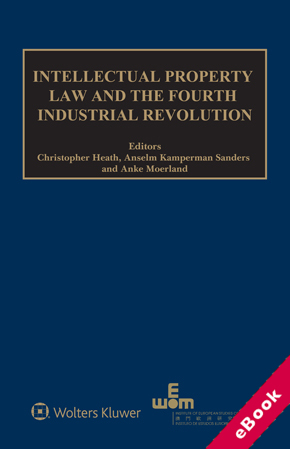
Intellectual Property Law and the Fourth Industrial Revolution analyses how the fourth industrial revolution changes the framework of intellectual property rights in the context of data, competition and compliance and how these changes can serve society. It is in the very nature of intellectual property rights that their justification and scope correlate with extraneous factors, such as societal perception and technological development. The convergence of various fields of technology is changing the fabric of society. Big data and data mining, Internet of Things, artificial intelligence and blockchains are already affecting business models and leading to social and economic transformations that have been dubbed by the fourth industrial revolution.
Well-known authorities in intellectual property law offer in-depth chapters on how intellectual property rights may have to change (or not) in the light of:
Offering the first in-depth legal commentary and analysis of this highly topical issue, the book approaches the fourth industrial revolution from the perspectives of technical background, society and law. Its authoritative study of how the data-driven economy influences innovation and technology transfer is without peer. The book will be welcomed by practising lawyers in intellectual property rights and competition law, as well as by academics, think tanks and policymakers.