
The eBooks we sell are sold as a single-user licence and are intended for the end user only.
The sale of some eBooks are restricted to certain countries. To alert you to such restrictions, please select the country of the billing address of your credit or debit card you wish to use for payment.
For further information see https://www.wildy.com/ebook-formats
Once the order is confirmed an e-mail will be sent to you to allow you to download the eBook. For UK purchases this will be automatic. For purchases outside the UK a member of staff will need to confirm the sale. (Staff are available to do this during normal business hours, Mon-Fri 8:30-17:00 UK time)
All eBooks are supplied firm sale and cannot be returned. If you believe there is a fault with your eBook then contact us on ebooks@wildy.com and we will help in resolving the issue. This does not affect your statutory rights.
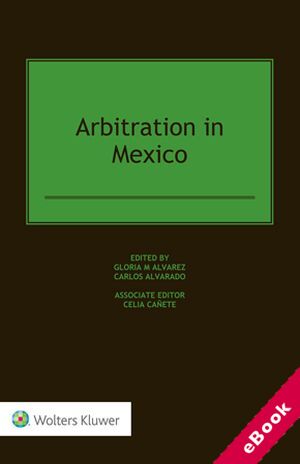
Arbitration in Mexico is the most comprehensive and first-of-its-kind book in English on arbitration law and practice in Mexico, offering an exhaustive pragmatic analysis of arbitration in Mexico in various fields and an in-depth description and analysis of the role and attitude of national courts towards arbitration and national, regional, and international arbitration institutions. Mexico has played a major role in shaping the growth and development of international arbitration practice, in significant part due to its global prominence at the competitive forefront of manufacturing, agriculture, telecommunications, finance, real estate, tourism, trade, and commercial transactions, all while crafting its own policies to achieve the energy transition. In addition, its close ties with the United States and Canada and its important business relations with the rest of the world have made Mexico a leading subject of investment treaty practice.
What’s in this book:
Authored by the luminaries of Mexican arbitration practice and scholarship, the contributions clearly and succinctly extricate complex but common issues arising in commercial and investment treaty disputes. The following features of Mexico’s dynamic body of arbitration law and practice have been covered:
How this will help you:
This book furnishes a thorough understanding of all of Mexico’s arbitration law and practices nationwide, practical guidance on identifying and assessing the different theoretical and practical legal avenues available, and relevant usages of ADR mechanisms in commercial disputes. It will be highly appreciated by arbitrators, judges, in-house counsel, Mexican state-owned companies, global law firms, large- and medium-sized companies doing transnational business, policymakers, and arbitration academics.










