
The eBooks we sell are sold as a single-user licence and are intended for the end user only.
The sale of some eBooks are restricted to certain countries. To alert you to such restrictions, please select the country of the billing address of your credit or debit card you wish to use for payment.
For further information see https://www.wildy.com/ebook-formats
Once the order is confirmed an e-mail will be sent to you to allow you to download the eBook. For UK purchases this will be automatic. For purchases outside the UK a member of staff will need to confirm the sale. (Staff are available to do this during normal business hours, Mon-Fri 8:30-17:00 UK time)
All eBooks are supplied firm sale and cannot be returned. If you believe there is a fault with your eBook then contact us on ebooks@wildy.com and we will help in resolving the issue. This does not affect your statutory rights.
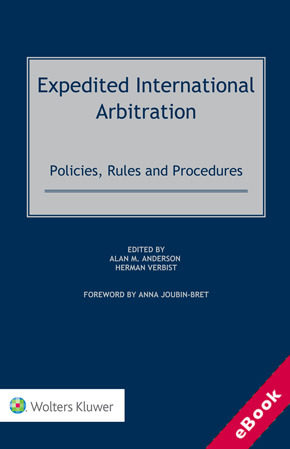
Expedited International Arbitration considers how expedited international arbitration policies and procedures, including the 2021 UNCITRAL Expedited Arbitration Rules, operate and affect international commercial arbitration, investor-State arbitration and mediation globally. Increasingly, international commercial arbitration has come to resemble the judicial process it was intended to replace, especially in terms of speed, costs and efficiency. Arbitration institutions worldwide have adopted rules or procedures to expedite the arbitral process to address these concerns.
Comprising nineteen chapters, the book brings together thirty-one distinguished practitioners, academics and experts in the field from around the world. It furnishes diverse and rich perspectives on the various methods adopted to provide an expeditious and cost-effective means for dispute resolution, while recognizing the due process risks involved. Its comprehensive analysis of the case for expedited arbitration and the principles underpinning it covers the following aspects:
Arbitrators and parties to international agreements will better understand the issues, options, and consequences that may result from expedited arbitration. Practitioners will benefit from guidance in drafting arbitration clauses and weighing the pros and cons of expedited arbitration procedures in various jurisdictions and under various rules, both institutions and ad hoc. This insightful book will benefit international commercial arbitration as stakeholders seek to return international commercial arbitration to its foundational underpinnings: a prompt, productive and cost-effective means of resolving commercial disputes.










