
The eBooks we sell are sold as a single-user licence and are intended for the end user only.
The sale of some eBooks are restricted to certain countries. To alert you to such restrictions, please select the country of the billing address of your credit or debit card you wish to use for payment.
For further information see https://www.wildy.com/ebook-formats
Once the order is confirmed an e-mail will be sent to you to allow you to download the eBook. For UK purchases this will be automatic. For purchases outside the UK a member of staff will need to confirm the sale. (Staff are available to do this during normal business hours, Mon-Fri 8:30-17:00 UK time)
All eBooks are supplied firm sale and cannot be returned. If you believe there is a fault with your eBook then contact us on ebooks@wildy.com and we will help in resolving the issue. This does not affect your statutory rights.
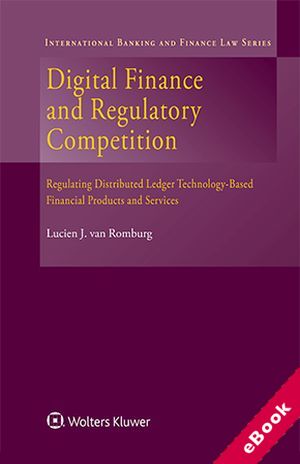
Digital Finance and Regulatory Competition is a book addressing the question of whether the world’s leading financial centres – Hong Kong, London, and New York – engaged in regulatory competition with one another through their formulation of the rules to govern distributed ledger technology (DLT)-based financial products and services in their respective jurisdictions during the period 2008-2022. In light of this, the book furnishes a clear and cohesive framework to understand the influence of regulatory competition in the world’s major financial centres, utilising a narrative lens built on a comparative study of legal, regulatory, and policy instruments. The outcome is an exhaustive and thought-provoking analysis which distils observations regarding the regulation of DLT-based financial products and services and the potential implications for the future regulation of other novel technologies in the financial services industry.
The following issues and topics concerning the intersection of regulatory competition and fintech have been included:
The analysis is particularly enlightening in its consideration of the extent to which jurisdictions feel motivated to compete for the benefits which may result from developing appropriate laws and regulations to govern DLT-based financial products and services.
One of the very few studies covering international regulatory competition in the fintech field, this nonpareil book closely evaluates the extent to which authorities are likely to relax, undercut, or strengthen their regulation of novel and burgeoning technologies in finance-related fields of law. It will deepen the understanding of lawmakers, policymakers, and regulators, providing pragmatic insights into the potential impact of regulatory competition in this age of rapid technological advancement. Practitioners will benefit from the in-depth analysis of the regulation of DLT-based products and services in the world’s leading financial centres who ultimately influence the formulation of financial regulation elsewhere. The intersection between the regulation of DLT-based financial products and services and international regulatory competition is prime for further debate and discussion.










