
The eBooks we sell are sold as a single-user licence and are intended for the end user only.
The sale of some eBooks are restricted to certain countries. To alert you to such restrictions, please select the country of the billing address of your credit or debit card you wish to use for payment.
For further information see https://www.wildy.com/ebook-formats
Once the order is confirmed an e-mail will be sent to you to allow you to download the eBook. For UK purchases this will be automatic. For purchases outside the UK a member of staff will need to confirm the sale. (Staff are available to do this during normal business hours, Mon-Fri 8:30-17:00 UK time)
All eBooks are supplied firm sale and cannot be returned. If you believe there is a fault with your eBook then contact us on ebooks@wildy.com and we will help in resolving the issue. This does not affect your statutory rights.
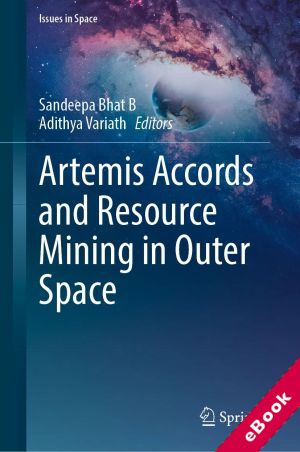
This book explores the timely intersection of international law, space exploration, and global equity, focusing on the implications of the Artemis Accords. As humanity embarks on a new era of space exploration, driven by technological advancements and geopolitical competition, the Artemis Accords represent a pivotal milestone in shaping the legal frameworks for outer space activities. These non-binding agreements, established by NASA and the U.S. Department of State, facilitate international cooperation in civil exploration and the peaceful use of the Moon, Mars, and other celestial bodies. The Accords outline a structure for resource mining on the Moon while emphasizing peaceful exploration. However, they also raise questions about governance, ownership, and accountability, particularly regarding private enterprises and international competition.
The book critically examines the potential for space resource mining to perpetuate global inequities, drawing parallels with historical patterns of colonialism. It emphasizes the need for more equitable frameworks that allow nations, including those from the Global South, to benefit from space exploration. The contributors, experts in space law and policy, provide diverse perspectives on the challenges and opportunities of resource mining in outer space, addressing ethical and environmental considerations to promote sustainability. Through case studies and analysis, the book offers innovative solutions for ensuring a just and inclusive future for space exploration, making it an essential resource for legal scholars, policymakers, and anyone interested in space law and global equity.










