
The eBooks we sell are sold as a single-user licence and are intended for the end user only.
The sale of some eBooks are restricted to certain countries. To alert you to such restrictions, please select the country of the billing address of your credit or debit card you wish to use for payment.
For further information see https://www.wildy.com/ebook-formats
Once the order is confirmed an e-mail will be sent to you to allow you to download the eBook. For UK purchases this will be automatic. For purchases outside the UK a member of staff will need to confirm the sale. (Staff are available to do this during normal business hours, Mon-Fri 8:30-17:00 UK time)
All eBooks are supplied firm sale and cannot be returned. If you believe there is a fault with your eBook then contact us on ebooks@wildy.com and we will help in resolving the issue. This does not affect your statutory rights.
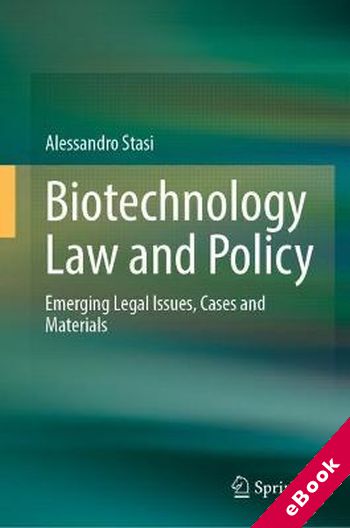
This book covers an extensive range of issues raised by biotechnological advancements from a regulatory perspective. Written in a clear and readable style, its main objective is to give readers an idea of the relationship between biotechnology and law. Biotechnology advancements and their ethical, moral, economic, and social implications in different fields and the consequential normative demands on the law are crucial to this book. The chapters cover a multitude of themes and some of the most important legal issues arising in relation to biotechnology, including the historical development of a legal framework sufficient to protect public safety, the current biotechnology regulatory system, and the rules directing the primary agencies that regulate the products of biotechnology, namely the US Food and Drug Administration, the US Department of Agriculture, and the US Environmental Protection Agency, patents and IP rights in biotechnology, the regulation of human genome editing and its impact on health research, law and emerging genome editing technologies from recombinant DNA to CRISPR/Cas9, the development of legal principles to protect property rights in the human body and allow the efficient use of human tissue, organs, DNA, and cell-lines in medical research, and legal issues arising from the use of genetic engineered plants and animals.
Presenting arguments that have been drawn from careful examination of various international documents and decisions made by legal institutions and judicial bodies, this book would be a valuable read for practitioners as well as academics of biotechnology law.











