The eBooks we sell are sold as a single-user licence and are intended for the end user only.
The sale of some eBooks are restricted to certain countries. To alert you to such restrictions, please select the country of the billing address of your credit or debit card you wish to use for payment.
For further information see https://www.wildy.com/ebook-formats
Once the order is confirmed an e-mail will be sent to you to allow you to download the eBook. For UK purchases this will be automatic. For purchases outside the UK a member of staff will need to confirm the sale. (Staff are available to do this during normal business hours, Mon-Fri 8:30-17:00 UK time)
All eBooks are supplied firm sale and cannot be returned. If you believe there is a fault with your eBook then contact us on ebooks@wildy.com and we will help in resolving the issue. This does not affect your statutory rights.
Due to a technical issue some ebooks are not available to order.
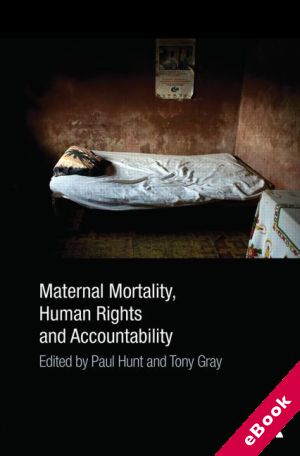
Maternal mortality remains one of the highest causes of death in the world today. A fact recognised by the UN Human Rights Council with resolutions aimed at reducing preventable maternal mortality in 2009 and 2010, and as part of the Millennium Development Goals in 2000 which included a commitment by the international community to reduce the maternal mortality ratio by three-quarters between 1990 and 2015. This book focuses on a critically important part of maternal mortality and human rights, that of monitoring, accountability and redress at the local, national and international level.
The book features contributions from an impressive list of researchers, scholars, legal practitioners and activists including: Eileen Chamberlain Donahoe; Paul Hunt; Navanethem Pillay; and Samantha Lobis. Part one on monitoring considers the use of and 'citizenship surveillance', the role of indicators and benchmarks in reducing maternal mortality and the monitoring and analysing health budgets in relation to maternal mortality. The book then goes on to look at accountability exploring the the use of maternal death audits, the role of national and local parliamentary bodies and courts and human rights organizations as well as considering how international accountability for maternal mortality can be strengthened. The book functions as an introduction to some of the key issues on maternal mortality, human rights and accountability, and provides a valuable link between academic debates, discussions at UN and NGO level, and practice on the ground.