
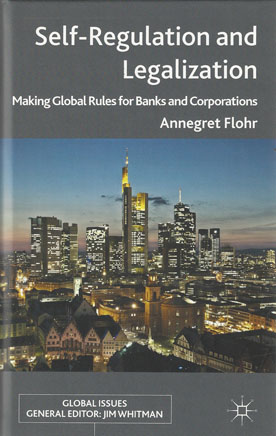
The latest global financial crisis led many to ask how public regulation could fail so badly and many to answer that it was captured by private interests.
This book asks to what extent this is true. It inquires how the growing reliance on industry self-regulation affects the role of international law and the trend to international legalization that International Relations research has long predicted. While focusing on the field of banking regulation, the book is rooted in classic International Relations approaches.
It proposes a new concept of 'international legalization' that integrates rationalist as well as constructivist views of international law. Two case studies of the international anti-money laundering regime and the Wolfsberg Principles, on the one hand, and the environmental and social safeguards regime and the Equator Principles, on the other hand, show that industry self-regulation can foster rather than hinder the emergence of international regulation.











