
The eBooks we sell are sold as a single-user licence and are intended for the end user only.
The sale of some eBooks are restricted to certain countries. To alert you to such restrictions, please select the country of the billing address of your credit or debit card you wish to use for payment.
For further information see https://www.wildy.com/ebook-formats
Once the order is confirmed an e-mail will be sent to you to allow you to download the eBook. For UK purchases this will be automatic. For purchases outside the UK a member of staff will need to confirm the sale. (Staff are available to do this during normal business hours, Mon-Fri 8:30-17:00 UK time)
All eBooks are supplied firm sale and cannot be returned. If you believe there is a fault with your eBook then contact us on ebooks@wildy.com and we will help in resolving the issue. This does not affect your statutory rights.
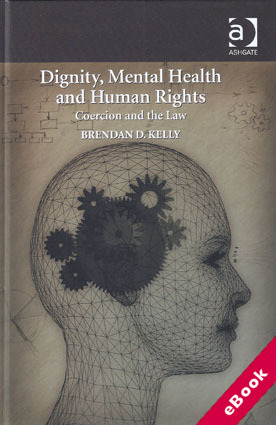
This book explores the human rights consequences of recent and ongoing revisions of mental health legislation in England and Ireland.
Presenting a critical discussion of the World Health Organization’s 'Checklist on Mental Health Legislation' from its Resource Book on Mental Health, Human Rights and Legislation, the author uses this checklist as a frame-work for analysis to examine the extent to which mental health legislation complies with the WHO human rights standards.
The author also examines recent case-law from the European Court of Human Rights, and looks in depth at the implications of the United Nations Convention on the Rights of Persons with Disabilities for mental health law in England and Ireland.
Focusing on dignity, human rights and mental health law, the work sets out to determine to what extent, if any, human rights concerns have influenced recent revisions of mental health legislation, and to what extent recent developments in mental health law have assisted in protecting and promoting the human rights of the mentally ill. The author seeks to articulate better, clearer and more connected ways to protect and promote the rights of the mentally ill though both law and policy.










