
The eBooks we sell are sold as a single-user licence and are intended for the end user only.
The sale of some eBooks are restricted to certain countries. To alert you to such restrictions, please select the country of the billing address of your credit or debit card you wish to use for payment.
For further information see https://www.wildy.com/ebook-formats
Once the order is confirmed an e-mail will be sent to you to allow you to download the eBook. For UK purchases this will be automatic. For purchases outside the UK a member of staff will need to confirm the sale. (Staff are available to do this during normal business hours, Mon-Fri 8:30-17:00 UK time)
All eBooks are supplied firm sale and cannot be returned. If you believe there is a fault with your eBook then contact us on ebooks@wildy.com and we will help in resolving the issue. This does not affect your statutory rights.
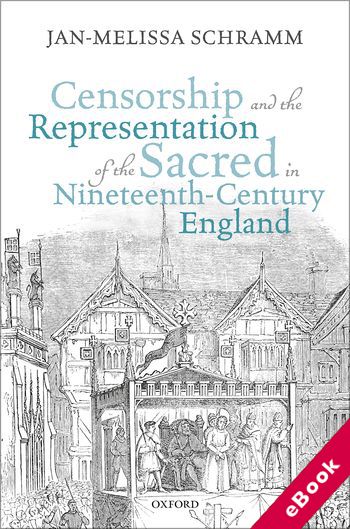
Throughout the nineteenth century, the performance of sacred drama on the English public stage was prohibited by law and custom left over from the Reformation: successive Examiners of Plays, under the control of the Lord Chamberlain's Office, censored and suppressed both devotional and blasphemous plays alike. Whilst the Biblical sublime found expression in the visual arts, the epic, and the oratorio, nineteenth-century spoken drama remained secular by force of precedent and law. The maintenance of this ban was underpinned by Protestant anxieties about bodily performance, impersonation, and the power of the image that persisted long after the Reformation, and that were in fact bolstered by the return of Catholicism to public prominence after the passage of the Catholic Relief Act in 1829 and the restoration of the Catholic Archbishoprics in 1850. But even as anti-Catholic prejudice at mid-century reached new heights, the turn towards medievalism in the visual arts, antiquarianism in literary history, and the 'popular' in constitutional reform placed England's pre- Reformation past at the centre of debates about the uses of the public stage and the functions of a truly national drama.
This book explores the recovery of the texts of the extant mystery-play cycles undertaken by antiquarians in the early nineteenth century and the eventual return of sacred drama to English public theatres at the start of the twentieth century. Consequently, law, literature, politics, and theatre history are brought into conversation with one another in order to illuminate the history of sacred drama and Protestant ant-theatricalism in England in the long nineteenth-century.










