The eBooks we sell are sold as a single-user licence and are intended for the end user only.
The sale of some eBooks are restricted to certain countries. To alert you to such restrictions, please select the country of the billing address of your credit or debit card you wish to use for payment.
For further information see https://www.wildy.com/ebook-formats
Once the order is confirmed an e-mail will be sent to you to allow you to download the eBook. For UK purchases this will be automatic. For purchases outside the UK a member of staff will need to confirm the sale. (Staff are available to do this during normal business hours, Mon-Fri 8:30-17:00 UK time)
All eBooks are supplied firm sale and cannot be returned. If you believe there is a fault with your eBook then contact us on ebooks@wildy.com and we will help in resolving the issue. This does not affect your statutory rights.
Due to a technical issue some ebooks are not available to order.
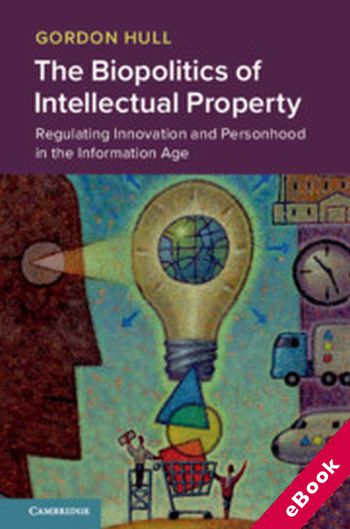
As a central part of the regulation of contemporary economies, intellectual property (IP) is central to all aspects of our lives. It matters for the works we create, the brands we identify and the medicines we consume. But if IP is power, what kind of power is it, and what does it do? Building on the work of Michel Foucault, Gordon Hull examines different ways of understanding power in copyright, trademark and patent policy: as law, as promotion of public welfare, and as promotion of neoliberal privatization. He argues that intellectual property policy is moving toward neoliberalism, even as that move is broadly contested in everything from resistance movements to Supreme Court decisions. This work should be read by anyone interested in understanding why the struggle to conceptualize IP matters.