The eBooks we sell are sold as a single-user licence and are intended for the end user only.
The sale of some eBooks are restricted to certain countries. To alert you to such restrictions, please select the country of the billing address of your credit or debit card you wish to use for payment.
For further information see https://www.wildy.com/ebook-formats
Once the order is confirmed an e-mail will be sent to you to allow you to download the eBook. For UK purchases this will be automatic. For purchases outside the UK a member of staff will need to confirm the sale. (Staff are available to do this during normal business hours, Mon-Fri 8:30-17:00 UK time)
All eBooks are supplied firm sale and cannot be returned. If you believe there is a fault with your eBook then contact us on ebooks@wildy.com and we will help in resolving the issue. This does not affect your statutory rights.
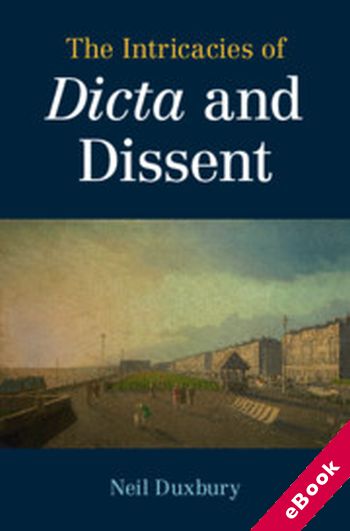
Common-law judgments tend to be more than merely judgments, for judges often make pronouncements that they need not have made had they kept strictly to the task in hand. Why do they do this? The Intricacies of Dicta and Dissent examines two such types of pronouncement, obiter dicta and dissenting opinions, primarily as aspects of English case law. Neil Duxbury shows that both of these phenomena have complex histories, have been put to a variety of uses, and are not amenable to being straightforwardly categorized as secondary sources of law. This innovative and unusual study casts new light on – and will prompt lawyers to pose fresh questions about – the common law tradition and the nature of judicial decision-making.