The eBooks we sell are sold as a single-user licence and are intended for the end user only.
The sale of some eBooks are restricted to certain countries. To alert you to such restrictions, please select the country of the billing address of your credit or debit card you wish to use for payment.
For further information see https://www.wildy.com/ebook-formats
Once the order is confirmed an e-mail will be sent to you to allow you to download the eBook. For UK purchases this will be automatic. For purchases outside the UK a member of staff will need to confirm the sale. (Staff are available to do this during normal business hours, Mon-Fri 8:30-17:00 UK time)
All eBooks are supplied firm sale and cannot be returned. If you believe there is a fault with your eBook then contact us on ebooks@wildy.com and we will help in resolving the issue. This does not affect your statutory rights.
Due to a technical issue some ebooks are not available to order.
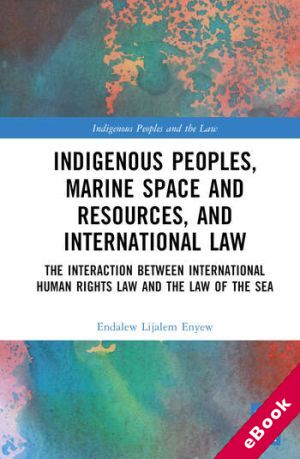
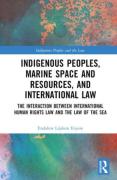
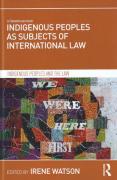
This book addresses the rights of indigenous peoples to marine space and associated marine resources under international law.
Examining the rights of indigenous peoples relating to marine space and marine resources both in international human rights law and the law of the sea, the book provides an in-depth critical analysis of the existing legal framework, whilst identifying the gaps, and possible further mechanisms, for recognizing the rights of indigenous peoples to marine space. The book addresses three main issues: 1) the extent to which international law recognizes and protects the rights of indigenous peoples in relation to marine space and marine resources; 2) if and how the law of the sea and international human rights law pertaining to the rights of indigenous peoples to marine space and marine resources interact; 3) whether and to what extent the law of the sea regime limits the capacity of coastal States to recognize and implement the rights of indigenous peoples relating to marine space and resources. In response, and in a context where indigenous marine rights are under increasing threat, the book develops an important critical theoretical and methodological approach which moves beyond the current doctrinal focus of much existing work in this area.
The book will appeal to academics, researchers, and practitioners in the areas of indigenous peoples and the law, international law, the law of the sea, and human rights.
Due to a technical issue some ebooks are not available to order.
Due to a technical issue some ebooks are not available to order.
Due to a technical issue some ebooks are not available to order.



Due to a technical issue some ebooks are not available to order.

Due to a technical issue some ebooks are not available to order.


Due to a technical issue some ebooks are not available to order.