The eBooks we sell are sold as a single-user licence and are intended for the end user only.
The sale of some eBooks are restricted to certain countries. To alert you to such restrictions, please select the country of the billing address of your credit or debit card you wish to use for payment.
For further information see https://www.wildy.com/ebook-formats
Once the order is confirmed an e-mail will be sent to you to allow you to download the eBook. For UK purchases this will be automatic. For purchases outside the UK a member of staff will need to confirm the sale. (Staff are available to do this during normal business hours, Mon-Fri 8:30-17:00 UK time)
All eBooks are supplied firm sale and cannot be returned. If you believe there is a fault with your eBook then contact us on ebooks@wildy.com and we will help in resolving the issue. This does not affect your statutory rights.
Due to a technical issue some ebooks are not available to order.
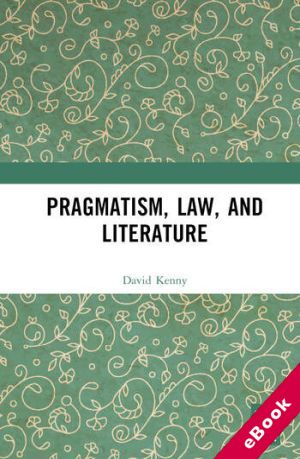
This book uses literary examples makes the case for understanding law and the legal system through the lens of philosophical pragmatism.
For pragmatists, experience is everything; and they argue against understanding the world through any abstraction, maintaining that it is simply too complicated to fit into categories or theories. Legal pragmatism is the application of this philosophy to the making of law, the practice of law, and the practice of judging. This book maintains that the best way to understand legal pragmatism is not through bare theoretical exegesis but through literature; that is, through stories that cast light on various pragmatic aspects of law. Engaging a range of literary sources, including works by Seamus Heaney, Hilary Mantel, Harper Lee and Ian McEwan, the book makes a compelling case for the contemporary relevance of pragmatism.
This book will appeal to legal theorists, law and literature/humanities scholars; readers of literary criticism; and those with interests in pragmatist philosophy.