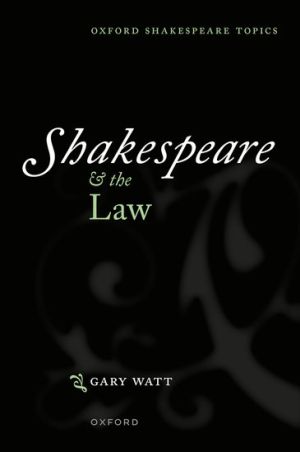
Shakespeare and the Law appreciates Shakespeare and his works as expressions of an English early modern culture in which the shared rhetorical practices of dramatists and lawyers were informed by the renaissance of classical practice. It argues that Shakespeare was not primarily concerned with the technical accuracy of law, legal ideas, and legal performances, but with their capacity to generate dramatic interest through dispute, trial, the breaking of bonds, and the bending of rules. It follows that all Shakespeare's plays are in a sense “law plays”.
Rhetorical practices can emerge as performances of power, but in Shakespeare's works they show more as instances of the human instinct to challenge power by playing with rules. Shakespeare employs the special magic of legal language, actions, and materials to conjure playgoers to act as a critical jury to events transacted on stage. This calls for close attention to Shakespeare's poetic sound effects and the ways they prompt audiences to confer a fair hearing.