The eBooks we sell are sold as a single-user licence and are intended for the end user only.
The sale of some eBooks are restricted to certain countries. To alert you to such restrictions, please select the country of the billing address of your credit or debit card you wish to use for payment.
For further information see https://www.wildy.com/ebook-formats
Once the order is confirmed an e-mail will be sent to you to allow you to download the eBook. For UK purchases this will be automatic. For purchases outside the UK a member of staff will need to confirm the sale. (Staff are available to do this during normal business hours, Mon-Fri 8:30-17:00 UK time)
All eBooks are supplied firm sale and cannot be returned. If you believe there is a fault with your eBook then contact us on ebooks@wildy.com and we will help in resolving the issue. This does not affect your statutory rights.
Due to a technical issue some ebooks are not available to order.
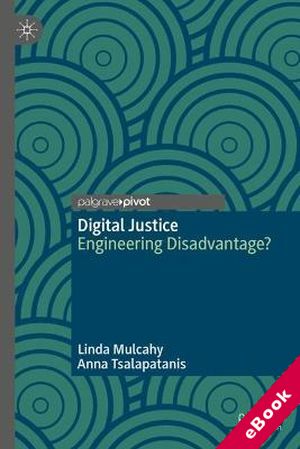
s book explores an increasingly important issue for legal systems across the world. It asks what do we lose and gain when legal proceedings go online? Adopting a multi-disciplinary socio-legal perspective, it draws on an emerging body of empirical evidence from the UK, Australia, Canada and the US about the ways in which digital justice is being conceived of and experienced. Insights are drawn from across the social sciences to discuss the interface of digitalisation with a range of issues such as due process, procedural justice, digital disadvantage, ceremony and ritual, science and technology studies and the dematerialisation of the civic sphere.
Written accessibly and provocatively, it poses questions from a variety of different perspective with a particular focus on marginalised groups.