
The eBooks we sell are sold as a single-user licence and are intended for the end user only.
The sale of some eBooks are restricted to certain countries. To alert you to such restrictions, please select the country of the billing address of your credit or debit card you wish to use for payment.
For further information see https://www.wildy.com/ebook-formats
Once the order is confirmed an e-mail will be sent to you to allow you to download the eBook. For UK purchases this will be automatic. For purchases outside the UK a member of staff will need to confirm the sale. (Staff are available to do this during normal business hours, Mon-Fri 8:30-17:00 UK time)
All eBooks are supplied firm sale and cannot be returned. If you believe there is a fault with your eBook then contact us on ebooks@wildy.com and we will help in resolving the issue. This does not affect your statutory rights.
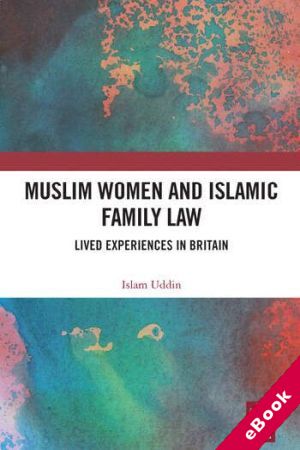
This book investigates the practice of Islamic family law among Muslim women in a minority context.
Muslims living as a minority often practise Islamic family law in a private capacity, following customary laws from their countries of origin. The invocation and operation of law in this context is, however, understudied and little understood. In response, this book provides an empirical study of the practice of Islamic family law in Britain. The book analyses the lived experiences of Muslim women and their interactions with the processes of marriage and divorce. Focusing centrally on Muslim women’s agency and legal consciousness, the book is based on in-depth interviews with Muslim women and with relevant professionals, as well as observations of Sharia Council hearings and the analysis of related documentation. The book thus offers a rich and nuanced account of how Muslim women currently navigate marriage, marital discord, dispute resolution, divorce, and post-divorce, offering insights that will better facilitate just outcomes for them.
This book will be of interest to scholars, students, and researchers in the fields of Islamic family law in minority contexts, as well as legal practitioners, policymakers and community activists working in this area.











