Wildy Logo
(020) 7242 5778
enquiries@wildy.com

Book of the Month

Cover of Privacy as Property

Privacy as Property

Price: £95.00

Advocacy: A Practical
Guide 2nd ed


 Peter Lyons, Chris Taylor


Welcome to Wildys

Watch


Judicial Cooperation in Commercial Litigation 3rd ed (The British Cross-Border Financial Centre World)


 Ian Kawaley, David Doyle, Shade Subair Williams


Offers for Newly Called Barristers & Students

Special Discounts for Newly Called & Students

Read More ...


Secondhand & Out of Print

Browse Secondhand Online

Read More...


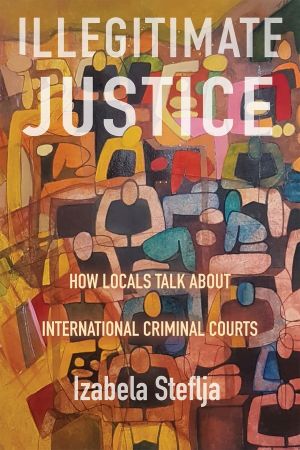
Illegitimate Justice: How Locals Talk About International Criminal Courts


ISBN13: 9780228027287
To be Published: March 2026
Publisher: McGill-Queen's University Press
Country of Publication: Canada
Format: Paperback
Price: £26.99


Also available as

International criminal courts exist to help countries and communities move forward after atrocities and to bring those accused of war crimes to justice. Yet local residents and witnesses often perceive them to lack political legitimacy.

Drawn from extensive primary research in Rwanda, Bosnia-Herzegovina, Serbia, and Kenya, Illegitimate Justice challenges the view that as long as international courts are striving for the concept of justice, establishing legal precedents, and prosecuting war criminals, they are fulfilling their purpose. Through interviews with individuals in the fields of education, law, religion, politics, the media, and civil society, Izabela Steflja listens to the people affected by conflict and by the justice processes meant to repair harm. She reveals how international courts have failed local communities through lack of accountability - even, at times, active disregard. The stories local people tell about international courts differ radically from those the international community tells itself about justice and reconciliation.

Combining field research with an original comparative narrative model, Illegitimate Justice will be invaluable reading for people active in post-conflict communities and work, as well as for legal, political, and human rights students and scholars.

Subjects:
International Criminal Law
Contents:
Introduction: The Local Constituents of International Criminal Justice 3
1. Fieldwork and Researcher Positionality in Post-Conflict Settings 27
2. "To break up with nationalism is a very difficult thing": BiH, Serbia, and the ICTY 50
3. Narratives About the ICTY in BiH and Serbia: Predetermination, Injustice, and Display of Power 84
4. "The war was like a volcano - when it splashes it goes everywhere": Rwanda and the ICTR 114
5. Narratives About the ICTR in Rwanda: Detachment, Otherness, and Costly Charades 155
6. The Political Meanings of International Criminal Justice: Kenya, Uganda, Croatia 192
Conclusion: The Local Legacies of International Criminal Justice 211
Notes 221
Index 283