We will be closed from 5pm BST on Friday 28th August 2026 for the late summer bank holiday, re-opening at 8.30am BST on Tuesday 1st September. Any orders placed during this period will be processed when we re-open.
The eBooks we sell are sold as a single-user licence and are intended for the end user only.
The sale of some eBooks are restricted to certain countries. To alert you to such restrictions, please select the country of the billing address of your credit or debit card you wish to use for payment.
For further information see https://www.wildy.com/ebook-formats
Once the order is confirmed an e-mail will be sent to you to allow you to download the eBook. For UK purchases this will be automatic. For purchases outside the UK a member of staff will need to confirm the sale. (Staff are available to do this during normal business hours, Mon-Fri 8:30-17:00 UK time)
All eBooks are supplied firm sale and cannot be returned. If you believe there is a fault with your eBook then contact us on ebooks@wildy.com and we will help in resolving the issue. This does not affect your statutory rights.
Due to a technical issue some ebooks are not available to order.
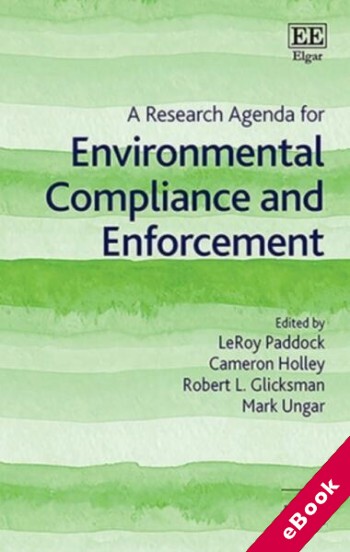
This incisive book examines cutting edge issues in environmental compliance and enforcement law. It highlights critical research needs in the field, and explains how their realisation would enhance the efforts of governments, citizens and regulated entities in ensuring compliance and enforcement.
Taking a comprehensive view of the field, expert authors address research questions beginning with detection of environmental harms and continuing through to judicial resolution. Chapters focus on key areas of research, including the structure of environmental enforcement programs, the role of behaviour in compliance, measuring outcomes, inspections and auditing, monitoring, emerging regulatory technologies, citizen law suits, as well as judicial remedies and sanctions. The book also analyzes the challenges of environmental enforcement in countries with limited enforcement resources through case studies involving Columbia and Peru, and the growing role of the private sector in environmental compliance.
With a spotlight on enhancing ecofriendly outcomes, this book is a valuable resource for scholars and students in environmental law, as well as criminal law and justice. It is also beneficial to environmental agency staff interested in identifying ways to improve their practices, and those involved in environmental research projects.