The eBooks we sell are sold as a single-user licence and are intended for the end user only.
The sale of some eBooks are restricted to certain countries. To alert you to such restrictions, please select the country of the billing address of your credit or debit card you wish to use for payment.
For further information see https://www.wildy.com/ebook-formats
Once the order is confirmed an e-mail will be sent to you to allow you to download the eBook. For UK purchases this will be automatic. For purchases outside the UK a member of staff will need to confirm the sale. (Staff are available to do this during normal business hours, Mon-Fri 8:30-17:00 UK time)
All eBooks are supplied firm sale and cannot be returned. If you believe there is a fault with your eBook then contact us on ebooks@wildy.com and we will help in resolving the issue. This does not affect your statutory rights.
Due to a technical issue some ebooks are not available to order.
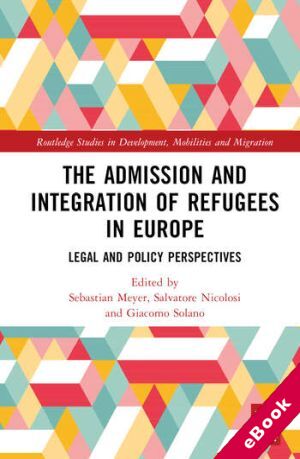
The Admission and Integration of Refugees in Europe argues for a more interconnected understanding of laws and policies for the admission and integration of refugees and asylum seekers in the European Union.
Admission and integration normally refer to different phases of the migratory process, but this demonstrates that they are inherently interconnected. Certain legal statuses conferred in admission procedures are directly relevant for the integration prospects of migrants, and the success or failure to integrate has potential repercussions for residence rights, although refugees are in that respect better protected than other immigrants. Legal pluralism further complicates the European context, as admission is often seen as under European Union jurisdiction, and integration as a member state consideration. However, the book argues that this legal pluralism in fact helps us to better explain how interaction between admission and integration takes place across laws and legal orders. Combining broad conceptual and constitutional analysis with closer readings of specific policies and country-specific case studies, this book demonstrates the potential for specific admission policies to either promote or hinder integration.
This book will be an important contribution to debates on European asylum and refugee law, human rights, and migrant integration policy.