Wildy Logo
(020) 7242 5778
enquiries@wildy.com

Book of the Month

Cover of 4 Stone Buildings on Liquidators

4 Stone Buildings on Liquidators

Edited by: Andrew de Mestre KC
Price: £289.00

Planning Law:
A Practitioner's
Handbook 2nd ed


 William Webster, Robert Weatherley


Welcome to Wildys

Watch


Corporate Insolvency Practice:
Litigation, Procedure
and Precedents 3rd ed


 Mark Watson-Gandy


Offers for Newly Called Barristers & Students

Special Discounts for Newly Called & Students

Read More ...


Secondhand & Out of Print

Browse Secondhand Online

Read More...


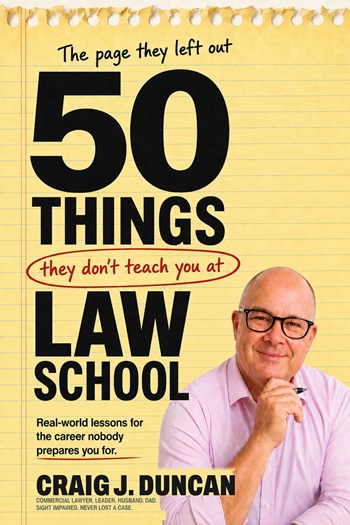
50 Things They Don't Teach You at Law School: Real-world lessons for the career nobody prepares you for


ISBN13: 9798177612720
Published: September 2026
Publisher: Independently Published
Country of Publication: UK
Format: Paperback
Price: £19.99


Despatched in 7 to 9 days.

You learned the law. Now comes the part nobody put on the syllabus

How do you tell a partner you have made a mistake? When do you fight every change in a contract, and when do you leave it alone? How do you work out who actually knows what is going on, say yes without becoming a doormat, and build a career without handing your whole life to it?

This is a practical guide to the human, commercial and occasionally ridiculous reality of becoming a lawyer. Fifty concise chapters, each with a real story, the trap to avoid and something you can do differently tomorrow morning

Learn everyone's name. Ask the stupid question early. Put the answer first. Take notes nobody asked for. Never negotiate against yourself. Know the end game and work backwards from it.

For trainees, newly qualified solicitors, in-house counsel and anyone who has discovered that qualifying was only the beginning, this is the page law school left out

Craig J. Duncan is a solicitor of England and Wales with nearly three decades in technology and commercial law. He trained in the City at Wilde Sapte, now Dentons, went in-house early and rose to General-Counsel, and has negotiated deals in more than forty countries. He has done all of it as a sight-impaired lawyer.


Subjects:
General Interest, Careers and Professional Development
Contents:
A Note Before You Start
PART ONE: Arriving
1. Accept that you are bottom of the food chain
2. Learn everyone's name
3. Be useful before you try to be impressive
4. Ask the stupid question before it becomes an expensive one
5. Find the person who actually knows
6. Reliability beats brilliance
7. Answer the question you were actually asked
8. Own mistakes quickly
9. Stop performing being a lawyer
10. Your reputation is built in the small moments
PART TWO: People, trust and communication
11. Assume good intentions first
12. Escalation is a ladder, not a grenade
13. Listen properly
14. Take notes even when nobody asks you to
15. Confirm what you think you have been asked to do
16. Learn your supervisor's working style
17. Your colleagues are not your competition
18. Be the colleague people want in the room when it all goes wrong
PART THREE: Judgement and commercial usefulness
19. Answer the question that follows the question
20. Know the end game and work backwards
21. The legal answer is not always the useful answer
22. 'No' is not legal advice
23. Understand what the client actually wants
24. Learn how your client makes money
25. Do not build a £20,000 legal solution to a £5,000 problem
26. Give a recommendation, not just options
27. Distinguish what matters from what merely exists
PART FOUR: Files, documents and detail
28. Know when to go to town and when to leave the document alone
29. Reading is the job, so build the way you read
30. Build a chronology early
31. Keep your own running action list
32. Version control is not administrative trivia
33. What to be good at now that the first draft is free
34. Check names, dates, numbers and defined terms twice
35. Leave a trail another competent lawyer can follow
PART FIVE: Clients, deals and negotiation
36. Clients hate surprises more than they hate bad news
37. Pick up the phone before the email chain becomes ridiculous
38. Write every email as though somebody hostile will read it later
39. Not every clause deserves a fight
40. Never negotiate against yourself
41. Understand the numbers
42. Aggression is not strength
PART SIX: The career nobody prepares you for
43. You do not have to be first in and last out
44. Say yes, but do not become a doormat
45. The only person you need to beat is yesterday's version of yourself
46. Nobody is managing your career except you
47. Ask for feedback before you need it
48. Sponsors matter more than mentors
49. Work will take everything you volunteer
50. Build a life bigger than your job
About the Author
Acknowledgements








