The eBooks we sell are sold as a single-user licence and are intended for the end user only.
The sale of some eBooks are restricted to certain countries. To alert you to such restrictions, please select the country of the billing address of your credit or debit card you wish to use for payment.
For further information see https://www.wildy.com/ebook-formats
Once the order is confirmed an e-mail will be sent to you to allow you to download the eBook. For UK purchases this will be automatic. For purchases outside the UK a member of staff will need to confirm the sale. (Staff are available to do this during normal business hours, Mon-Fri 8:30-17:00 UK time)
All eBooks are supplied firm sale and cannot be returned. If you believe there is a fault with your eBook then contact us on ebooks@wildy.com and we will help in resolving the issue. This does not affect your statutory rights.
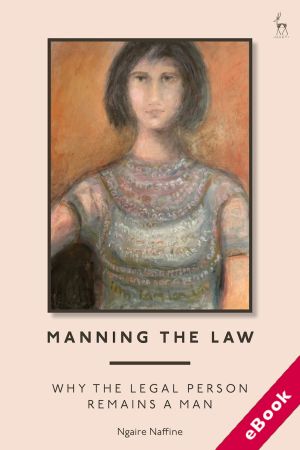
This is a study of elite English men of English law and the methods they used to retain and justify their power and privilege, through controlling the story of the legal person.
It looks at how these men of legal authority thought of themselves and their institution; how they studied and explained law; and how they put themselves in the middle of it, as the standard human in need of legal regulation and protection and in charge of that regulation and protection, and assigned to women an inferior legal role and being.
The main concept employed to do all this was 'the legal person'. From the 1860s to the 1920s the courts declared that women were not 'persons' who could exercise public power – to vote, to sit in Parliament, to gain degrees, to be lawyers. Up to the end of the 20th century, and into the 21st, women's personhood remained precarious in the private sphere, for rape was excused within a marriage and female reproduction remained under state control (as it still does).
It looks at the positive exclusion of women from the means of making legal meaning, especially the ability to shape law's central concept and shows the epistemological effects of this sex differential of legal power which are still felt today. Leading legal thinkers who helped to construct the concept are still revered. Law's continuing male orientation is neither seen nor acknowledged and the legal person is treated (falsely) as if he had always been and remains anyone.