The eBooks we sell are sold as a single-user licence and are intended for the end user only.
The sale of some eBooks are restricted to certain countries. To alert you to such restrictions, please select the country of the billing address of your credit or debit card you wish to use for payment.
For further information see https://www.wildy.com/ebook-formats
Once the order is confirmed an e-mail will be sent to you to allow you to download the eBook. For UK purchases this will be automatic. For purchases outside the UK a member of staff will need to confirm the sale. (Staff are available to do this during normal business hours, Mon-Fri 8:30-17:00 UK time)
All eBooks are supplied firm sale and cannot be returned. If you believe there is a fault with your eBook then contact us on ebooks@wildy.com and we will help in resolving the issue. This does not affect your statutory rights.
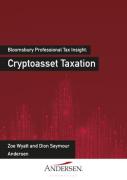
This publication provides clear and authoritative guidance on the tax issues surrounding crypto-assets in the United Kingdom. Crypto-assets are a type of digital asset. The most common examples are Bitcoin and Ethereum. HMRC do not consider crypto-assets to be money or that buying or selling crypto-assets is gambling. This means that, in HMRC's view, profits or gains from buying and selling crypto-assets are taxable.
The author is Dion Seymour, a Crypto and Digital Assets Technical Assets Director at Anderson. He was formerly the crypto-asset policy and product owner at HMRC. As well as advisory work in this area, he also speaks regularly on this subject.
This is an evolving area in the UK and globally. It can be challenging for advisors dealing with business and individual clients to keep up with the pace of technical developments and the tax implications. The book will help readers understand HMRC's view by providing clear and practical guidance on the technology (including clear definitions of the technical terms), and the tax impact, including relevant case law. The commentary will be enhanced by the inclusion of worked examples and illustrative flowcharts and diagrams.
The book will also outline the compliance requirements including self assessment returns and penalties. The OECD regime will also be covered.
This book will be an authoritative and valuable tool for any advisors looking in to this area for the first time.