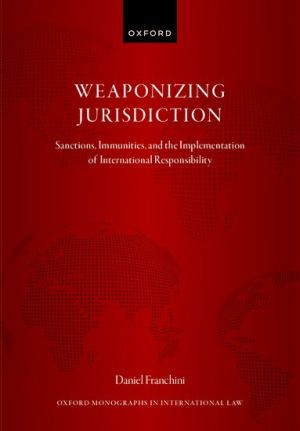
Sanctions, asset freezes, and court cases against foreign states have become central tools of modern foreign policy, yet their legal status remains highly contested. Weaponizing Jurisdiction explains how states use jurisdiction and immunity as instruments of international pressure when institutional enforcement mechanisms fail.
Drawing on extensive state practice, the book situates these developments within the broader framework of international responsibility. It shows that in certain circumstances, contested assertions of jurisdiction or denials of immunity may operate as countermeasures, namely non-forcible unilateral responses aimed at inducing compliance with international obligations in a decentralized international legal order.
The book develops the first systematic account of what it terms 'jurisdictional countermeasures'. The analysis ranges across extraterritorial sanctions, universal jurisdiction, the denial of state and official immunities, and measures against sovereign assets, including the immobilization of central bank reserves. It advances a coherent framework for assessing the legality and limits of jurisdictional action adopted in response to internationally wrongful conduct. Particular attention is given to the role of domestic courts in the implementation of international responsibility, and to the structural implications of using jurisdiction as a tool of enforcement in the absence of centralized authority.
By identifying both the functions and the limits of jurisdictional countermeasures, the book clarifies their place within the international legal order. It demonstrates how such measures may, in limited circumstances, contribute to addressing enforcement gaps and supporting the protection of community interests, while also highlighting the risks they pose to legality, legitimacy, and due process. Weaponizing Jurisdiction offers a rigorous and timely contribution to debates on unilateralism, accountability, and the evolving architecture of international law.