
The eBooks we sell are sold as a single-user licence and are intended for the end user only.
The sale of some eBooks are restricted to certain countries. To alert you to such restrictions, please select the country of the billing address of your credit or debit card you wish to use for payment.
For further information see https://www.wildy.com/ebook-formats
Once the order is confirmed an e-mail will be sent to you to allow you to download the eBook. For UK purchases this will be automatic. For purchases outside the UK a member of staff will need to confirm the sale. (Staff are available to do this during normal business hours, Mon-Fri 8:30-17:00 UK time)
All eBooks are supplied firm sale and cannot be returned. If you believe there is a fault with your eBook then contact us on ebooks@wildy.com and we will help in resolving the issue. This does not affect your statutory rights.
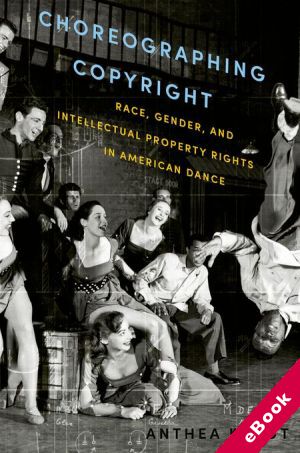
Choreographing Copyright provides a historical and cultural analysis of U.S.-based dance-makers' investment in intellectual property rights. Although federal copyright law in the U.S. did not recognize choreography as a protectable class prior to the 1976 Copyright Act, efforts to win copyright protection for dance began eight decades earlier. In a series of case studies stretching from the late nineteenth century to the early twenty-first, the book reconstructs those efforts and teases out their raced and gendered politics. Rather than chart a narrative of progress, the book shows how dancers working in a range of genres have embraced intellectual property rights as a means to both consolidate and contest racial and gendered power.
A number of the artists featured in Choreographing Copyright are well-known white figures in the history of American dance, including modern dancers Loie Fuller, Hanya Holm, and Martha Graham, and ballet artists Agnes de Mille and George Balanchine. But the book also uncovers a host of marginalized figures - from the South Asian dancer Mohammed Ismail, to the African American pantomimist Johnny Hudgins, to the African American blues singer Alberta Hunter, to the white burlesque dancer Faith Dane - who were equally interested in positioning themselves as subjects rather than objects of property, as possessive individuals rather than exchangeable commodities. Choreographic copyright, the book argues, has been a site for the reinforcement of gendered white privilege as well as for challenges to it.
Drawing on critical race and feminist theories and on cultural studies of copyright, Choreographing Copyright offers fresh insight into such issues as: the raced and gendered hierarchies that govern the theatrical marketplace, white women's historically contingent relationship to property rights, legacies of ownership of black bodies and appropriation of non-white labor, and the tension between dance's ephemerality and its reproducibility.










