The eBooks we sell are sold as a single-user licence and are intended for the end user only.
The sale of some eBooks are restricted to certain countries. To alert you to such restrictions, please select the country of the billing address of your credit or debit card you wish to use for payment.
For further information see https://www.wildy.com/ebook-formats
Once the order is confirmed an e-mail will be sent to you to allow you to download the eBook. For UK purchases this will be automatic. For purchases outside the UK a member of staff will need to confirm the sale. (Staff are available to do this during normal business hours, Mon-Fri 8:30-17:00 UK time)
All eBooks are supplied firm sale and cannot be returned. If you believe there is a fault with your eBook then contact us on ebooks@wildy.com and we will help in resolving the issue. This does not affect your statutory rights.
Due to a technical issue some ebooks are not available to order.
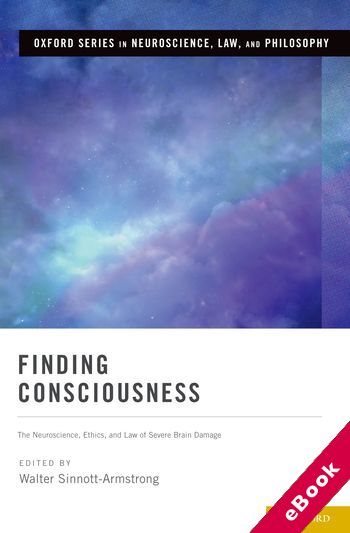
Modern medicine enables us to keep many people alive after they have suffered severe brain damage and show no reliable outward signs of consciousness. Many such patients are misdiagnosed as being in a permanent vegetative state when they are actually in a minimally conscious state. This mistake has far-reaching implications for treatment and prognosis. To alleviate this problem, neuroscientists have recently developed new brain-scanning methods for detecting consciousness in some of these patients and even for asking them questions, including "Do you want to stay alive?" These new technological abilities raise many questions about what exactly these methods reveal (Is it really consciousness?), how reliable they are (Do they fail to detect consciousness in some patients who are conscious?), what are these patients' lives like (Do they feel pain?), what we should do for and to these patients (Should we let them die?), who should decide (Are these patients competent to decide for themselves?), and which policies should governments and hospitals enact (Which kinds of treatment should be made available?). All of these questions and more are addressed in this collection of original papers. The prominent contributors provide background information, survey the issues and positions, and take controversial stands from a wide variety of perspectives, including neuroscience and neurology, law and policy, and philosophy and ethics. This collection should interest not only academics but anyone who might suffer brain damage, which includes us all.