
The eBooks we sell are sold as a single-user licence and are intended for the end user only.
The sale of some eBooks are restricted to certain countries. To alert you to such restrictions, please select the country of the billing address of your credit or debit card you wish to use for payment.
For further information see https://www.wildy.com/ebook-formats
Once the order is confirmed an e-mail will be sent to you to allow you to download the eBook. For UK purchases this will be automatic. For purchases outside the UK a member of staff will need to confirm the sale. (Staff are available to do this during normal business hours, Mon-Fri 8:30-17:00 UK time)
All eBooks are supplied firm sale and cannot be returned. If you believe there is a fault with your eBook then contact us on ebooks@wildy.com and we will help in resolving the issue. This does not affect your statutory rights.
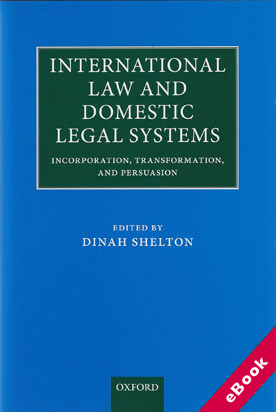
Different countries incorporate and interpret international law in different ways. This book provides a systematic analysis of the domestic constitutional regime of over two dozen countries, setting out the status accorded to international law in those countries and its normative weight, as well as problems relating to its implementation.
This country-by-country comparison allows the book to examine how the international legal order and domestic legal systems interact and influence each other. Through a series of chapters on the role of international law in 27 countries throughout the world, it shows a growing tendency towards greater democratic participation in treaty-making coupled with a significant utilization of informal agreements that by-pass such participation, as well as a role for non-binding normative instruments as persuasive authority in domestic judicial decision-making.
The chapters suggest a stronger attachment to international law in legal systems that have survived a period of repression, resulting in many cases in a higher normative status for international human rights instruments in those states. The impact of the European Union on the constitutional order of its member states is also examined.











