The eBooks we sell are sold as a single-user licence and are intended for the end user only.
The sale of some eBooks are restricted to certain countries. To alert you to such restrictions, please select the country of the billing address of your credit or debit card you wish to use for payment.
For further information see https://www.wildy.com/ebook-formats
Once the order is confirmed an e-mail will be sent to you to allow you to download the eBook. For UK purchases this will be automatic. For purchases outside the UK a member of staff will need to confirm the sale. (Staff are available to do this during normal business hours, Mon-Fri 8:30-17:00 UK time)
All eBooks are supplied firm sale and cannot be returned. If you believe there is a fault with your eBook then contact us on ebooks@wildy.com and we will help in resolving the issue. This does not affect your statutory rights.
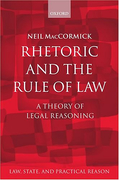
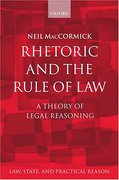
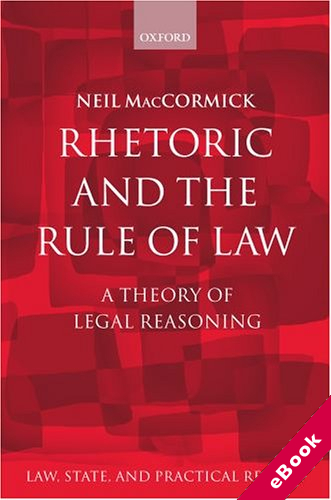
When cases come before courts can we predict the outcome? Is legal reasoning rationally persuasive, working within a formal structure and using recognisable forms of arguments to produce predictable results? Or is legal reasoning mere nullrhetoricnull in the pejorative sense, open to use, and abuse, to achieve whatever ends unscrupulous politicians, lawyers and judges desire? If the latter what becomes of the supposed security of living under the rule of law?
This book tackles these questions by presenting a theory of legal reasoning, developing the authornulls classic account given in Legal Reasoning and Legal Theory (OUP, 1978). It explains the essential role syllogism plays in reasoning used to apply the law, and the elements needed in addition to deductive reasoning to give a full explanation of how law is applied and decisions justified through the use of precedent, analogy and principle.
The book highlights that problems of interpretation, classification and relevance will always arise when applying general legal standards to individual cases. In justifying their conclusions about such problems, judges need to be faithful to categorical legal reasons and yet fully sensitive to the particulars of the cases before them. How can this be achieved, and how should we evaluate the possible approaches judges could take to solving these problems? By addressing these issues the book asks questions at the heart of understanding the nature of law and the moral complexity of the rule of law.