
The eBooks we sell are sold as a single-user licence and are intended for the end user only.
The sale of some eBooks are restricted to certain countries. To alert you to such restrictions, please select the country of the billing address of your credit or debit card you wish to use for payment.
For further information see https://www.wildy.com/ebook-formats
Once the order is confirmed an e-mail will be sent to you to allow you to download the eBook. For UK purchases this will be automatic. For purchases outside the UK a member of staff will need to confirm the sale. (Staff are available to do this during normal business hours, Mon-Fri 8:30-17:00 UK time)
All eBooks are supplied firm sale and cannot be returned. If you believe there is a fault with your eBook then contact us on ebooks@wildy.com and we will help in resolving the issue. This does not affect your statutory rights.
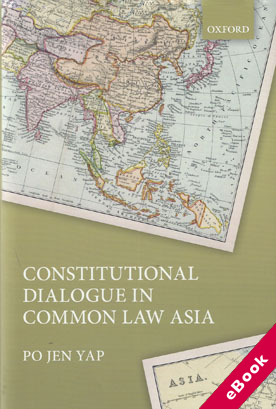
In a comprehensive examination of the constitutional systems of Hong Kong, Singapore, and Malaysia, Po Jen Yap contributes to a field that has traditionally focussed on Western jurisdictions.
Drawing on the history and constitutional framework of these Asian law systems, this book examines the political structures and traditions that were inherited from a British government and the major constitutional developments since decolonization.
Yap examines the judicial crises that have occurred in each of the three jurisdictions, and the techniques that have been developed to allow courts to preserve the right of the legislature to disagree with the courts' decisions using the ordinary political processes.
The book focuses on how these novel judicial techniques have been applied to four core constitutional areas: freedom of expression, freedom of religion, right to equality, and criminal due process rights. Chapters on each of these core topics examine and critique major case law, and develop a model of dialogic judicial review that offers a compelling alternative to legislative and judicial supremacy.










