The eBooks we sell are sold as a single-user licence and are intended for the end user only.
The sale of some eBooks are restricted to certain countries. To alert you to such restrictions, please select the country of the billing address of your credit or debit card you wish to use for payment.
For further information see https://www.wildy.com/ebook-formats
Once the order is confirmed an e-mail will be sent to you to allow you to download the eBook. For UK purchases this will be automatic. For purchases outside the UK a member of staff will need to confirm the sale. (Staff are available to do this during normal business hours, Mon-Fri 8:30-17:00 UK time)
All eBooks are supplied firm sale and cannot be returned. If you believe there is a fault with your eBook then contact us on ebooks@wildy.com and we will help in resolving the issue. This does not affect your statutory rights.
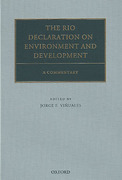
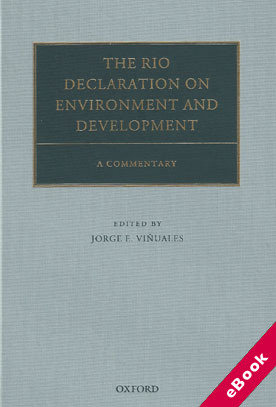
The international community has long grappled with the issue of safeguarding the environment and encouraging sustainable development, often with little result.
The 1992 Rio Declaration on Environment and Development was an emphatic attempt to address this issue, setting down 27 key principles for the international community to follow. These principles define the rights of people to sustainable development, and the responsibilities of states to safeguard the common environment.
The Rio Declaration established that long term economic progress required a connection to environmental protection. It was designed as an authoritative and comprehensive statement of the principles of sustainable development law, an instrument to take stock of the past international and domestic practice, a guide for the design of new multilateral environmental regimes, and as a reference for litigation.
This commentary provides an authoritative and comprehensive overview of the principles of the Declaration, written by over twenty inter-disciplinary contributors, including both leading practitioners and academics. Each principle is analysed in light of its origins and rationale.
The book investigates each principle's travaux preparatoires setting out the main points of controversy and the position of different countries or groups. It analyses the scope and dimensions of each principle, providing an in-depth understanding of its legal effects, including whether it can be relied before a domestic or international court.
It also assesses the impact of the principles on subsequent soft law and treaty development, as well as domestic and international jurisprudence. The authors demonstrate the ways in which the principles interact with each other, and finally provide a detailed analysis of the shortcomings and future potential of each principle. This book will be of vital importance to practitioners, scholars, and students of international environomental law and sustainable development.