
The eBooks we sell are sold as a single-user licence and are intended for the end user only.
The sale of some eBooks are restricted to certain countries. To alert you to such restrictions, please select the country of the billing address of your credit or debit card you wish to use for payment.
For further information see https://www.wildy.com/ebook-formats
Once the order is confirmed an e-mail will be sent to you to allow you to download the eBook. For UK purchases this will be automatic. For purchases outside the UK a member of staff will need to confirm the sale. (Staff are available to do this during normal business hours, Mon-Fri 8:30-17:00 UK time)
All eBooks are supplied firm sale and cannot be returned. If you believe there is a fault with your eBook then contact us on ebooks@wildy.com and we will help in resolving the issue. This does not affect your statutory rights.
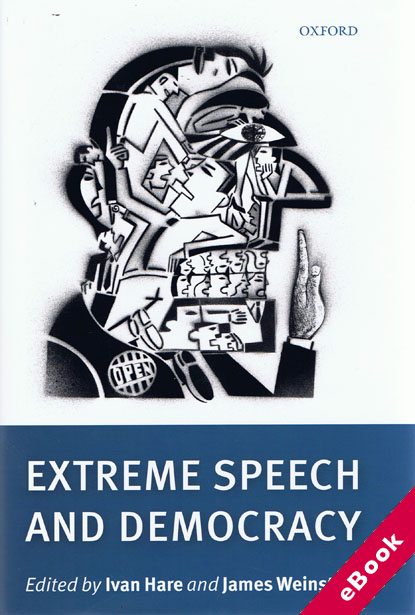
A fundamental precept of all liberal democracies is a commitment to free speech. However, democracies differ fundamentally when addressing the constitutionality of laws regulating certain kinds of speech.
In the United States, the commitment to free speech in the First Amendment has been held by the Supreme Court to protect the public expression of the most noxious racist ideology and hence to render unconstitutional even narrow restrictions on hate speech. In contrast, governments have been accorded considerable leeway to restrict racist and other extreme expression in almost every other democracy, including Canada, the United Kingdom and other European countries.
This book considers the constitutionality of hate speech regulation, and examines how liberal democracies have adopted fundamental differences in the way they respond to racist or extreme expressions.
What accounts for the marked differences in attitude towards the constitutionality of hate speech regulation? Does hate speech regulation violate the core free speech principle constitutive of democracy? Has the traditional US position on extreme expressions justifiably not found favour elsewhere? Should, or could, other values such as the commitment to equality or dignity legitimately override the right to free speech in some circumstances?
This collection of papers from some of the top free speech thinkers and writers today attempts to analyse and answer some of these fundamental questions that confront liberal democracies faced with extreme expressions.










