
The eBooks we sell are sold as a single-user licence and are intended for the end user only.
The sale of some eBooks are restricted to certain countries. To alert you to such restrictions, please select the country of the billing address of your credit or debit card you wish to use for payment.
For further information see https://www.wildy.com/ebook-formats
Once the order is confirmed an e-mail will be sent to you to allow you to download the eBook. For UK purchases this will be automatic. For purchases outside the UK a member of staff will need to confirm the sale. (Staff are available to do this during normal business hours, Mon-Fri 8:30-17:00 UK time)
All eBooks are supplied firm sale and cannot be returned. If you believe there is a fault with your eBook then contact us on ebooks@wildy.com and we will help in resolving the issue. This does not affect your statutory rights.
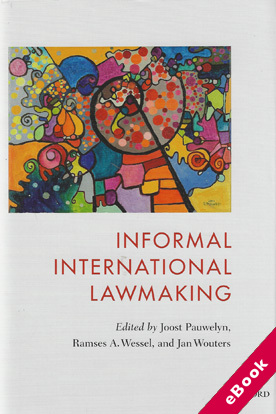
Informal international lawmaking is a term used to describe the process by which new international legal norms are created outside of the normal fora for negotiation. The outcomes of these processes are not codified in treaties or conventions and thus remain non-binding. They are also characterized by the involvement of non-traditional actors, such as regulators and agencies.
This book critically assesses the concept of informal international lawmaking, its legal nature, and impact at the national and international level. It examines whether it is on the rise, as is often claimed, and if so, what the implications of this are. It addresses what actors are involved in its creation, the processes utilized, and the informal output produced.
The book frames informal international lawmaking around three axes: output informality (novel types of norms), process informality (norm-making in networks outside international organizations), and actor informality (the involvement of public agencies and regulators, private actors, and international organizations).
Fundamentally, the book is concerned with whether this informality causes problems in terms of keeping transnational lawmaking accountable. By empirically analysing domestic processes of norm elaboration and implementation, the book addresses the key question of how to benefit from the effectiveness of informal international lawmaking without jeopardizing the accountability necessary in the process of making law.











